





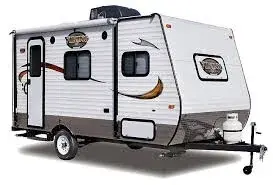
RVs and campers are some of the most frequently shipped oversized vehicles in the country, and the logistics are different enough from standard auto transport that they deserve their own guide. Whether you bought a Class A motorhome in Florida and need it delivered to Oregon, or you're relocating a fifth-wheel to a seasonal campsite, the process involves considerations that don't apply to shipping a sedan. We've helped customers with thousands of RV and camper shipments through American Auto Shipping, and this guide covers everything you need to know to get your rig from here to there safely and affordably in 2026.
Let's start by understanding the categories, because transport methods and costs vary significantly. Class A motorhomes are the largest -- think 25-45 feet, built on a bus or commercial truck chassis, fully self-propelled. Class B motorhomes (camper vans) are built on standard van chassis, typically 17-23 feet. Class C motorhomes are built on a truck or van chassis with an overcab sleeping area, usually 20-33 feet. Travel trailers are towed behind a vehicle and range from 12-35 feet. Fifth-wheel trailers connect via a hitch in the bed of a pickup truck and range from 22-40 feet. Pop-up campers and truck campers are the smallest and lightest. Each type ships differently.
Drive-away service vs. tow transport -- this is the fundamental choice for motorhomes (Class A, B, and C). Drive-away means a professional driver physically drives your RV from origin to destination. This is the most common method for motorhomes because they're self-propelled vehicles. The advantages: no need for a trailer or carrier, the driver navigates directly (no oversized load permits needed beyond what the RV already requires), and it's typically faster. The disadvantages: your engine, transmission, and tires accumulate miles (typically 400-600 per day), fuel costs are high (Class A motorhomes get 6-10 MPG), and there's normal road wear on the vehicle. Drive-away typically costs $1.00-$2.00 per mile for the driver, plus fuel.
Tow transport is the standard for travel trailers, fifth-wheels, pop-up campers, and any non-motorized RV. A carrier uses a truck equipped with the appropriate hitch to tow your trailer to the destination. For motorhomes, flatbed or lowboy transport is technically possible but rarely practical or cost-effective -- you'd be paying to haul a 30,000+ lb vehicle on a trailer when it could simply be driven. That said, tow transport for non-running motorhomes is available and uses specialized equipment. For travel trailers and fifth-wheels, the carrier needs a truck rated for your trailer's weight with the correct hitch type (bumper pull or fifth-wheel). Not every carrier handles every size -- a 35-foot fifth-wheel weighing 14,000 lbs requires a heavy-duty tow vehicle.
What does it cost to ship an RV or camper in 2026? Here are realistic ranges. Pop-up campers and small trailers (under 20 feet, under 5,000 lbs): $500-$1,500 for most routes. Mid-size travel trailers (20-30 feet): $1,000-$3,000 depending on distance. Large travel trailers and fifth-wheels (30-40 feet): $1,500-$4,500. Class B motorhomes (drive-away): $1,500-$3,500 cross-country, including fuel. Class C motorhomes (drive-away): $2,000-$5,000 cross-country, including fuel. Class A motorhomes (drive-away): $3,000-$7,000+ cross-country, with fuel being the single biggest variable (a 2,500-mile trip at 8 MPG and $3.50/gallon = $1,094 in fuel alone). Distance, fuel prices, vehicle size, and seasonal demand all influence final pricing.
Can you leave personal belongings inside during transport? This is one of the most common questions we get about RV shipping, and the answer is: it depends, and it's complicated. For drive-away service, many drivers will transport an RV with personal belongings inside, provided everything is properly secured. Cabinet contents should be locked or latched, nothing should be loose on countertops or floors, and the overall added weight needs to stay within the vehicle's GVWR (Gross Vehicle Weight Rating). For towed trailers, carriers are generally less comfortable with loaded interiors because the additional weight affects towing dynamics and braking. Here's the critical point: personal belongings inside the RV are not covered by the carrier's cargo insurance. The insurance covers the vehicle itself, not your stuff. If you leave belongings inside, you're accepting that risk.
Preparing an RV or camper for transport requires more steps than a standard vehicle. For motorhomes (drive-away): fill the fuel tank (the driver will need it), check all fluid levels (oil, coolant, transmission), verify tire pressure and condition, ensure the engine starts reliably and the transmission shifts properly, test all lights and turn signals, and make sure the registration and insurance are current (the driver needs valid documents). For all RVs and trailers: retract all slide-outs completely and verify they're locked. Secure all cabinet doors and drawers -- use painter's tape or latches. Disconnect propane tanks and ensure they're properly secured. Retract awnings and secure them. Lower the TV antenna and any satellite dishes. Secure the entry door and all exterior compartments.
Water systems need special attention. Drain the freshwater tank, gray water tank, and black water tank completely. If shipping during cold weather, winterize the water system to prevent frozen and burst pipes. Drain the water heater. If you have a refrigerator with water lines, turn it off and drain the lines. A full freshwater tank on a large RV can weigh 400-800 lbs -- that's weight the carrier doesn't want and your vehicle doesn't need during transport. Plus, water sloshing in tanks during transport creates unpredictable weight shifts that affect handling.
Insurance and documentation follow the same principles as other transport categories, but the stakes are higher because RVs are expensive. A new Class A motorhome can cost $100,000-$500,000+. Verify the carrier's (or driver's, for drive-away) insurance coverage and confirm it covers the full value of your RV. For drive-away, the driver should be covered under a commercial auto policy -- verify this before handing over the keys. Document your RV's condition exhaustively before shipping: exterior photos of every panel, the roof (if accessible), all four corners, any existing damage, the interior condition, and an odometer reading. For trailers, photograph the tongue, frame, tires, and undercarriage.
American Auto Shipping handles the full spectrum of RV and camper transport. List your RV with its type, year, make, model, length, and weight. Specify whether you need drive-away or tow service. We put your shipment in front of licensed auto transport companies whose carriers have the equipment, experience, and insurance for your specific RV type. Whether it's a 16-foot pop-up going to a campground across the state or a 42-foot Class A motorhome heading coast-to-coast, the offers come from professionals who do this every day. Get your free estimate and compare offers.
Key Takeaways
- •How much does it cost to ship an RV?
- •Can I leave belongings inside my RV during shipping?
- •What is the difference between drive-away and tow service for RVs?
Frequently Asked Questions
RV shipping costs range from $500-$1,500 for small pop-up campers to $3,000-$7,000+ for large Class A motorhomes on cross-country routes. Travel trailers run $1,000-$4,500 depending on size and distance. Drive-away fuel costs for motorhomes are a major factor -- a cross-country trip at 8 MPG can exceed $1,000 in fuel alone.
For drive-away service, many drivers allow secured personal belongings inside. For towed trailers, carriers generally prefer empty interiors. Critical point: personal belongings are not covered by carrier insurance regardless of transport method. Secure all items and accept the risk if you choose to leave belongings inside.
Drive-away means a professional driver physically drives your motorhome to the destination. Tow service means a carrier tows your trailer behind a truck. Drive-away is standard for self-propelled motorhomes; tow service is standard for travel trailers and fifth-wheels. Drive-away adds mileage to your engine but avoids trailer costs.
Retract all slide-outs, secure cabinet doors, disconnect propane tanks, retract awnings, lower antennas, and drain all water systems (freshwater, gray, black, water heater). For motorhomes, check fluids, tire pressure, lights, and ensure current registration. Remove or secure all loose items inside.
Related Resources
Ready to Ship Your Vehicle?
Get your free estimate in 60 seconds. American Auto Shipping has helped customers ship over 235,000+ vehicles since 1999.
Get a Free QuoteRelated Articles
How We Estimate Car Shipping Costs Now, and Why Every Number Shows Its Math
Every price range on this site now comes from one published formula: a fixed charge, tiered mileage, this week's diesel price, the season, and your vehicle. Here is the formula, the current numbers, and what an estimate can and cannot tell you.
Shipping a Car to Hawaii: What It Costs, Which Port, and How Long It Really Takes
Hawaii is not a long domestic move with a boat at the end. It is an ocean shipment with its own rules -- an agricultural inspection, an operable-vehicle requirement, and a port schedule that does not care about your moving date. Here is how it actually works.
The EV Weight Penalty: Why Shipping an Electric Car Costs More in 2026
Quotes for electric vehicles keep coming back higher than the gas version of the same car, and customers assume it is a surcharge for special handling. It is not. It is a federal weight limit written in the 1970s meeting a battery pack built in 2026 -- and it costs the carrier slots on the trailer.
Shipping a Car to Alaska: What It Really Costs, and Why It Is Two Trips Not One
Alaska is the route people underestimate most. There is no continuous road a standard car carrier can drive, so nearly every vehicle sails out of the Port of Tacoma -- which means you are booking two legs, not one. Here is what each costs and how long the whole thing really takes.
More Guides
How to Ship a Car: The Complete 2026 Guide
A step-by-step walkthrough of the entire car shipping process, from getting your first quote to taking delivery. Everything you need to know to ship a vehicle in 2026.
Car Shipping Costs: Everything You Need to Know in 2026
A detailed breakdown of car shipping pricing by distance, vehicle type, transport method, and season. Learn what actually drives costs and how to avoid bait-and-switch quotes.
Open vs Enclosed Auto Transport: Which Is Right for You?
A head-to-head comparison of open and enclosed auto transport with pros, cons, pricing differences, and practical advice on when to use each method.
How Long Does It Take to Ship a Car?
Transit times by distance, factors that affect timing, pickup windows, and expedited options. Realistic timelines based on 27 years of shipping data.