





Door-to-Door Auto Transport
The most convenient way to ship your vehicle. The company you book with picks up at your location and delivers right to your destination.
The short answer
Door-to-door auto transport, also called door-to-door car shipping, means the driver picks up your vehicle at the address you choose and delivers it to the address you choose at the other end. There is no terminal to drop it at or collect it from. If your street is too narrow or restricted for a full-size car carrier, you meet the driver at a nearby open lot instead. It is the standard way cars ship in the U.S., and you compare offers from licensed auto transport companies before you book.
What is Door to Door Auto Transport?
Door-to-door auto transport is one of the most convenient methods to ship a vehicle. Your carrier picks up your vehicle at one address and delivers it directly to another — right to your door.
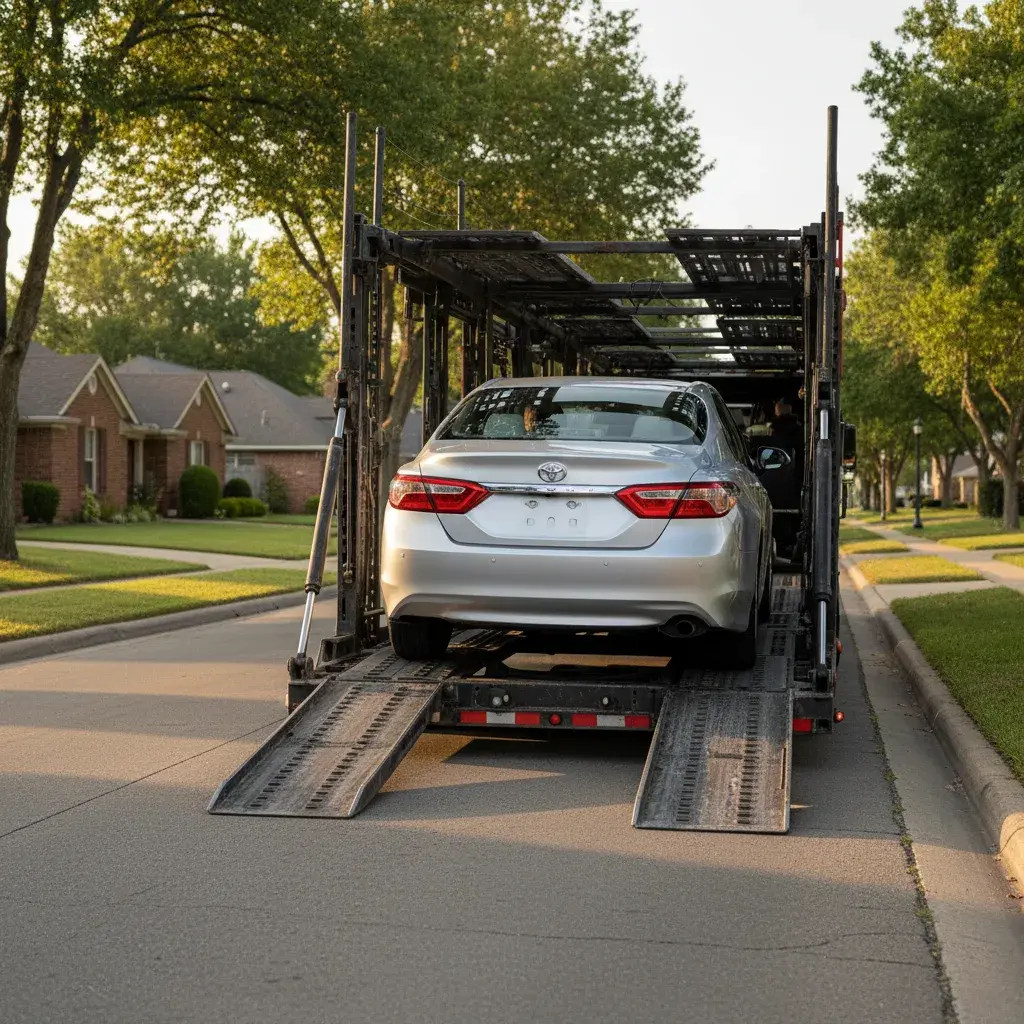
If the transport truck cannot physically fit on your street due to its size, you and the driver will arrange a nearby meeting point for pickup and delivery. All you need to do is provide the addresses for pickup and drop-off.
This is the most popular shipping method in the industry and the most cost-effective way to transport a vehicle today. The companies we work with offer address-to-address service to and from all states in the contiguous United States.
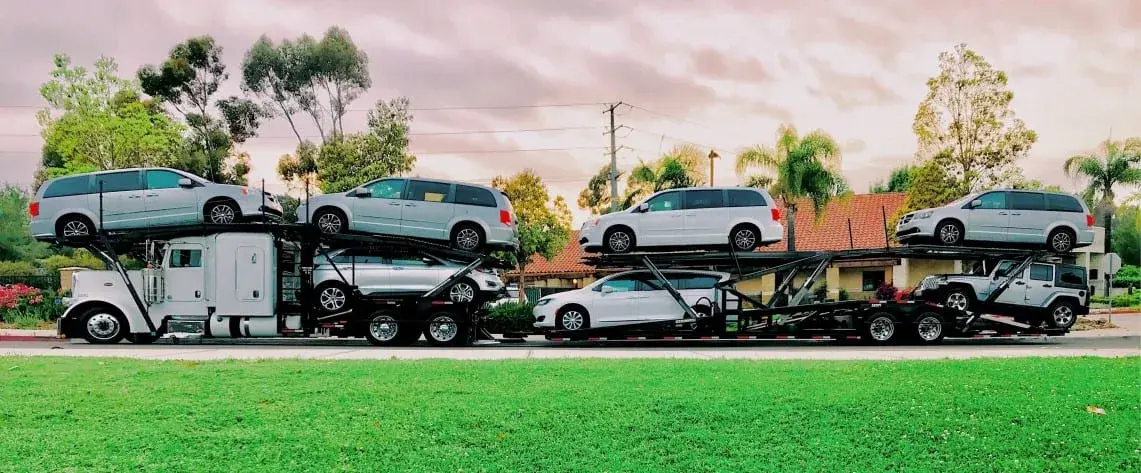
An open carrier providing door-to-door vehicle shipping services.
How Much Does Door to Door Auto Transport Cost?
The final cost of this service depends on several factors:
- Vehicle make and model – Vehicles that are smaller in size are usually cheaper to transport.
- Delivery time frame – The faster or more urgent the transport is, the higher the cost.
- Distance traveled – Vehicles that need to be shipped in shorter distances are charged lower transport prices.
- Transport type – Do you need open auto transport or enclosed auto transport? The first option offers the best value, and will work great for those on a budget or those transporting standard vehicles. The latter solution costs about 30% more and is perfectly suited to owners of, say, modified or expensive cars.
- Location – Routes between major cities tend to be less expensive due to higher carrier availability.
- Condition of the vehicle – Is the vehicle inoperable, modified, or operable? The most cost-effective deal is with operable cars/trucks/motorcycles since everything else will require specialist loading and unloading equipment, which increases the price.
- Seasonality – Summer moves tend to cost less, while winter road conditions make transport more challenging, which can increase the price.
How Does Door to Door Auto Transport Work?
Here's how the process works in three easy steps:
Get a quote & schedule the pickup
Check the shipping cost estimator for an estimate range on your route, then get your free estimate. You simply provide some details (trailer type, condition of the vehicle, make and model, and pickup and drop-off locations), licensed auto transport companies compete with their best offers, and you choose.
Alternatively, you can use our Live Chat function or call us at (800) 930-7417 to speak to a live representative. Our team will be happy to walk you through your free estimate. You never pay us a cent.
Your vehicle is picked up
Your carrier will contact you a few hours before the scheduled pick-up time. Make sure your location is accessible by large commercial vehicles. If the truck can't physically fit, you and the driver will arrange an alternative spot nearby (a wider street or parking lot).
Before pick-up, the driver will inspect your vehicle and fill out the Bill of Lading, noting any existing damage. You'll receive a copy for your records. Then your vehicle is loaded onto the carrier and you're on your way.
Remember that you can contact the driver whenever you feel you need to throughout the duration of the journey. The company you book with handles updates about the transport, so ask it how it keeps you posted.
You receive your vehicle at your desired location
As soon as your vehicle reaches its destination, the carrier will get in touch with you to ensure that you are at the specified drop-off location. If you won't be available to pick up your vehicle at the designated time, you can always ask someone else to receive it on your behalf. In this case, ensure the representative is at least 18 years of age. The last task is to inspect the vehicle against the pickup condition report, note any new scratch or dent on the Bill of Lading, and then sign it.
Note: Some counties and cities restrict large trucks in residential areas. If this applies, the driver will let you know and you'll arrange a nearby meeting point. Auto transport carriers are up to 80 feet long, making tight suburban or urban streets challenging to navigate.
This is also true if the truck is restricted by things like tight turns, speed bumps, low-hanging trees, or narrow streets. If this is the case, it can actually pose a damage risk to other vehicles on the truck, or the truck itself! As such, the driver may request you meet at a nearby parking lot or another area with sufficient space for a safe pick up/drop off (i.e., a grocery store).
How Long Does Door to Door Auto Transport Take?
The overall vehicle transport transit times vary. This is true, however, of every shipment, and not just door-to-door shipments. Some of the factors that affect them are:
- Distance – The further you need to transport your vehicle, the longer it will take to drop it off at the selected address. This also includes remote locations.
- Driver's hours – Under FMCSA hours-of-service rules, a truck driver may drive at most 11 hours after 10 consecutive hours off duty, and may not drive after 60/70 hours on duty in 7/8 consecutive days. These limits keep drivers rested and set how far a carrier travels each day.
- Weather conditions – Hurricanes, thunderstorms, hail, ice, snow, tornados, and other adverse weather conditions affect the speed at which the driver can transport your vehicle. These weather phenomena also cause traffic, detours, and road congestions, which, too, hamper the carrier.
Benefits of Door to Door Auto Transport
- Vehicle transport made easy for you – You don't have to break a sweat. You have your vehicle transported from Point A to Point B safely and quickly by experienced drivers. All you need to do is wait for it to arrive right at your doorstep.
- Time-saving option – No more long drives that take forever. A professional carrier takes that responsibility off your shoulders so you can focus on other important aspects of your life. When the vehicle reaches its final destination, you simply pick it up!
- Insurance you can check – Interstate carriers must file at least $750,000 in liability coverage with FMCSA. Cargo coverage is set by each company, so ask the company you book for its certificate and look up its USDOT number before pickup.
- No need to go to a terminal – Instead of having your vehicle left at a terminal for weeks, which is usually the case with terminal-to-terminal shipping, your driver hauls straight away!
Should I Ship My Car Door to Door?
Get Your Free QuoteEasiest
The most popular car shipping method — simple, convenient, and hassle-free.
Cost Effective
Terminal to terminal shipping is more expensive, and many routes are unavailable. Get your car where it needs to go, when it needs to get there.
Personal Service
Meet your auto shipping carrier face to face, shake hands and be present for the loading and unloading process.
Planning
Get your vehicle picked up faster and delivered sooner. Need your car from A to B as fast as possible? Get Car Shipping Quote
Door-to-Door Auto Transport FAQ
Door-to-door auto transport (door-to-door car shipping) means the driver picks up your vehicle at the address you give and delivers it to the address you give at the destination. No terminal drop-off or pickup is needed.
It still means the driver comes to you. If a full-size car carrier cannot safely get onto your street because of its length, low trees, tight turns or local truck limits, you and the driver agree on the nearest open spot, such as a store parking lot a few blocks away.
As close as safely possible. If your street is too narrow for a 75-foot trailer, the driver will meet you at the nearest accessible location, usually within a few blocks.
Usually not by much. Most car carriers already run door-to-door, while terminal service can add storage fees and is not offered on every route. Terminal shipping mainly helps when nobody can be present at pickup or delivery.
Choose an open carrier, give a pickup window of several days instead of one fixed date, offer to meet the driver near a main highway if you live on a narrow or rural street, and avoid the busiest months for your route. Then compare offers and get the final price in writing from the company you book.
On the road, trips under 500 miles usually take about 2 to 3 days and coast-to-coast trips about 7 to 10 days, plus a pickup window of a few days. Federal rules let a driver drive at most 11 hours after 10 hours off duty, which sets the daily pace.
Interstate carriers must file at least $750,000 in liability coverage with FMCSA. Federal rules set no cargo-insurance minimum for car haulers, so ask the company you book for its cargo insurance certificate and check its USDOT number on FMCSA's SAFER Company Snapshot.
Someone must be present to sign the Bill of Lading and hand over/receive the keys. A friend or family member can stand in.
Sources
- FMCSA: Summary of Hours of Service Regulations – 11 hours of driving after 10 consecutive hours off duty; 60/70 hours on duty in 7/8 days.
- FMCSA: Insurance Filing Requirements – $750,000 minimum liability for for-hire carriers of non-hazardous property over 10,001 lbs; no federal cargo minimum outside household goods.
- FMCSA SAFER: Company Snapshot – Look up any auto transport company by USDOT or MC number.
Checked October 23, 2026.