





★ Key Takeaways
- ✓Nearly every vehicle bound for Alaska sails roll-on/roll-off out of the Port of Tacoma to Anchorage. There are two sailings a week, and that ocean leg is the fixed part of your cost.
- ✓Published 2026 ocean rates from Tacoma to Anchorage start around $2,670 for a standard car and rise to roughly $3,339 once the vehicle is over about 6 feet 6 inches tall -- height, not weight, moves you into the next bracket.
- ✓If the car is not already in the Pacific Northwest, you are paying for a second leg to get it to the port. That is the piece people forget to budget for.
- ✓Door to door commonly lands between $1,200 and $4,000 depending on where the vehicle starts and how tall it is.
- ✓Summer is the good window. Gulf of Alaska storms disrupt sailings in fall and winter, so build real slack into any move between October and March.
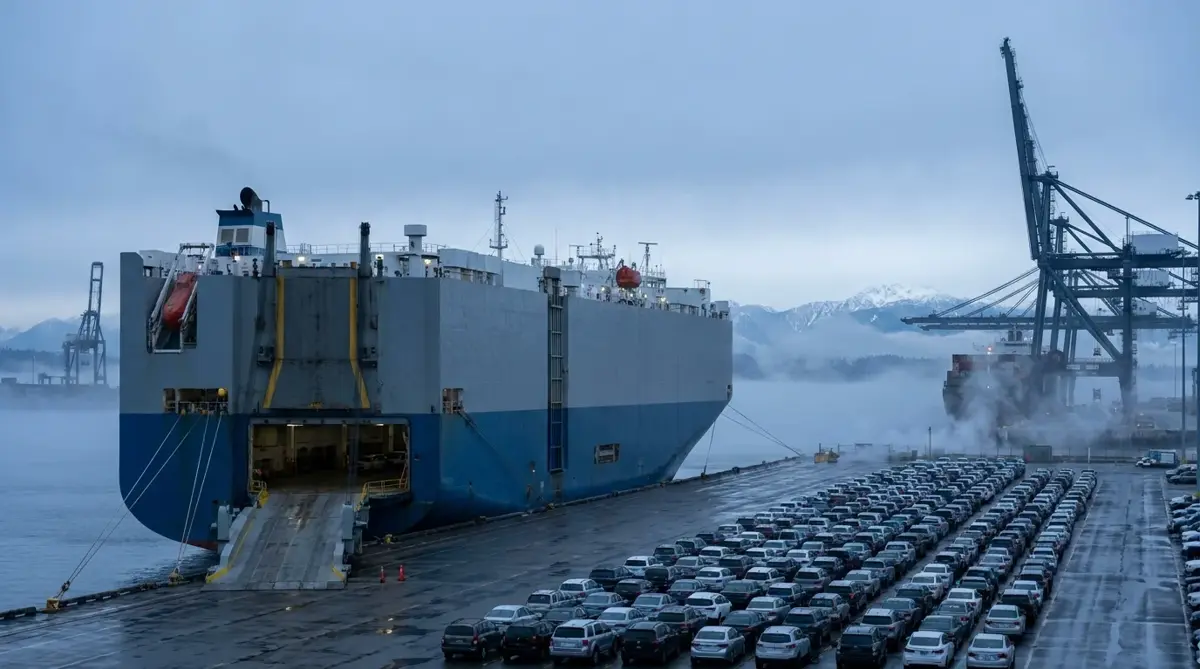
Somebody asked us recently about moving a Kia from Alabama to Alaska, and it is a good example of the route that trips up more people than any other. Alaska looks on a map like it should just be a very long drive, and technically there is a road -- but there is no continuous highway route a standard multi-car carrier is going to run, and no carrier is putting your sedan through 1,400 miles of the Alaska Highway through Canada to save you money. What actually happens is that your vehicle goes by sea, out of the Port of Tacoma, and everything about the price and the timeline follows from that.
So the first mental adjustment is this: you are not booking one shipment. You are booking two legs that happen to be sold together. Leg one is a truck carrier moving your vehicle from wherever it is now to the port in Tacoma. Leg two is the ocean leg, roll-on/roll-off service to Anchorage, running twice a week. Once you separate those in your head, the quotes stop looking random. Somebody in Seattle is paying for one leg. Somebody in Miami is paying for a cross-country truck move plus the same ocean leg, which is why their number is so much bigger.
| Origin | Truck leg to Tacoma | Ocean leg to Anchorage | Typical total |
|---|---|---|---|
| Seattle / Tacoma, WA | Not needed | $2,100 - $2,700 | $2,100 - $2,700 |
| Portland, OR | $200 - $400 | $2,100 - $2,700 | $2,300 - $3,100 |
| Los Angeles, CA | $500 - $900 | $2,100 - $2,700 | $2,600 - $3,600 |
| Dallas, TX | $900 - $1,300 | $2,100 - $2,700 | $3,000 - $4,000 |
| Chicago, IL | $900 - $1,300 | $2,100 - $2,700 | $3,000 - $4,000 |
The ocean leg is the part you cannot negotiate much, and it is worth knowing the published numbers so nothing surprises you. As of mid-2026, Tacoma to Anchorage starts around $2,670 for a vehicle inside the standard envelope, and jumps to roughly $3,339 for anything over about 6 feet 6 inches tall. Read that second number carefully, because the bracket is about height, not weight. A lifted truck, a van with a roof rack, or an SUV with a cargo box bolted on can quietly push you into the taller category. If your vehicle is anywhere near that line, measure it before you book rather than after.
“Alaska is not one long shipment. It is two shipments wearing a trench coat -- price the truck leg and the ocean leg separately and the number finally makes sense.”
The truck leg is where the range in that table comes from, and it behaves like any other domestic auto transport -- distance, season, and how easy your pickup location is to reach. Coming from the Pacific Northwest it is small or nonexistent. Coming from the Midwest or the East Coast it can rival the ocean leg. The good news is that this is the leg where competition actually helps you, because plenty of carriers run into Tacoma and they will bid against each other for the load.
Ready to ship? Get a real price in 60 seconds.
We put your shipment in front of licensed auto transport companies running your route this week, and they send you their best offers — no obligation, no spam.
Get My Free Quote →On timing: budget more than you think. The ocean crossing itself is not the long part -- it is the waiting on either end. Your vehicle has to reach the port and be delivered into the terminal ahead of a specific sailing, and if it misses that window the next one is a few days out. Between the truck leg, the port cutoffs, the sailing, and pickup in Anchorage, a move from the Lower 48 typically runs a couple of weeks door to door. From the East Coast, plan on longer.
Season matters more here than almost anywhere else cars ship. Summer is the window you want. Gulf of Alaska weather in the fall and winter disrupts sailings, and a storm that delays a barge does not just move your car back a day -- it moves you to the next scheduled sailing, and that cascades into your truck leg on the other end. Winter also brings limited daylight and rough conditions on the Alaska side. If you have any choice about when to move, move between late spring and early fall.
A few practical notes that save people grief. Most ocean carriers require the vehicle to be operable to drive on and off the vessel, so a non-runner needs to be flagged early -- that changes your options and your price. Expect a fuel-level requirement, usually around a quarter tank. Personal belongings are generally not allowed in the vehicle for the ocean leg, which surprises people who were planning to use the car as a moving box. And keep your title and registration handy; you will need documentation at the terminal, and a financed vehicle may need a letter from the lienholder before it can sail.
Alaska is genuinely one of the more involved moves in this business, but it is completely routine once the pieces are in the right order. The mistake is treating it as one big mystery number instead of two known legs stacked together. Price them separately, book the truck leg with real competition, and give the calendar some room.
With American Auto Shipping, vetted, licensed auto transport companies compete for your shipment and you choose who moves your car. For an Alaska move that means the truck leg to the port goes out to carriers who compete for it, and you see the offers side by side before you choose. Get your free estimate or call us at (800) 930-7417 and we will walk you through both legs.
About the Author
Written by the American Auto Shipping team, in auto shipping since 1999. Prices and transit times in our posts are estimates from our published method; the real price comes from the company you book with.