






Cross Country Auto Transport
Whether you're relocating coast to coast or shipping a vehicle halfway across the country, licensed auto transport companies compete for your shipment with their best offers, and you choose. No guesswork, no runaround — just straightforward car shipping.
How Much Does Cross Country Auto Transport Cost?
In November 2026, our published formula puts a standard sedan on an open carrier at $1,430 – $1,930 for a 2,500 mi coast-to-coast trip, with 6 to 10 days in transit. A shorter cross-country move of about 1,000 mi runs $960 – $1,300 and 3 to 5 days. These are estimates, not quotes: vehicle size, open or enclosed transport, season and how flexible you are on pickup dates all move the number, and the licensed auto transport company you choose sets the price.
Compare offers from licensed auto transport companies. Free, no obligation.
Get your free estimate →| Road distance | Open carrier | Enclosed carrier |
|---|---|---|
| 1,500 mi | $1,120 – $1,520 | $1,680 – $2,280 |
| 2,000 mi | $1,290 – $1,740 | $1,930 – $2,610 |
| 2,500 mi | $1,430 – $1,930 | $2,140 – $2,890 |
| 3,000 mi | $1,570 – $2,120 | $2,350 – $3,180 |
Formula v2026.09.2 · EIA U.S. diesel $6.13/gal, week of Nov 9, 2026, 52-week average $4.97 · November pricing · road distance as stated.
Estimate, not a quote. Produced automatically by our published formula from public data; your price comes from the licensed auto transport partner you choose. How we estimate · Get your free estimate
Fuel: U.S. Energy Information Administration. Routing: © OpenStreetMap contributors (OSRM). ZIP locations: U.S. Census Bureau.
Questions about this estimate? Call (800) 930-7417
What Sets the Price of Shipping a Car Across the Country?
Seven things set the price of a cross-country shipment: distance, vehicle size, trailer type, season, whether the car runs, pickup and delivery location, and fuel.
- Distance. A longer haul costs more in total but less per mile: a 2,500-mile shipment costs less per mile than a 500-mile one.
- Vehicle size. Pickups and large SUVs take more trailer space than a sedan. In our formula a pickup adds 25% and an SUV 12%.
- Open or enclosed. Open auto transport is the most affordable. Enclosed auto transport carries fewer cars and protects the car fully, so our formula prices it at 1.5 times open.
- Season and direction. Summer and the snowbird months (south in October and November, north in April and May) run higher, and a route against the main flow can cost less.
- Whether the car runs. A non-running car needs a winch or forklift, which adds 20% in our formula.
- Pickup and delivery location. Door-to-door service is convenient but may cost slightly more than terminal-to-terminal, and rural pickup or delivery adds 10% because fewer carriers run those routes.
- Fuel. The weekly diesel price moves rates up or down.
For the average cost, the price per mile and every other distance, see how much it costs to ship a car. Every figure is built by the formula on How We Estimate.
How Long Does Cross Country Auto Transport Take?
A 2,500 mi coast-to-coast trip takes 6 to 10 days from pickup to delivery in our estimate, plus a pickup window that is usually 1 to 7 days depending on the route and time of year.
Car carriers cover roughly 350 to 500 miles a day, which accounts for driving hours, fuel stops, rest requirements and the occasional pickup or drop-off along the way. Weather, traffic and the carrier's current load schedule can all affect timing, and the company you book gives you its pickup and delivery window when you book.
| Road distance | Transit time |
|---|---|
| 1,000 mi | 3–5 days |
| 1,500 mi | 4–7 days |
| 2,000 mi | 5–8 days |
| 2,500 mi | 6–10 days |
| 3,000 mi | 7–11 days |
Formula v2026.09.2 · EIA U.S. diesel $6.13/gal, week of Nov 9, 2026, 52-week average $4.97 · November pricing · road distance as stated.
Estimate, not a quote. Produced automatically by our published formula from public data; your price comes from the licensed auto transport partner you choose. How we estimate · Get your free estimate
Fuel: U.S. Energy Information Administration. Routing: © OpenStreetMap contributors (OSRM). ZIP locations: U.S. Census Bureau.
Questions about this estimate? Call (800) 930-7417
What Is Cross Country Auto Transport?
Cross country auto transport means shipping a car across the country, usually coast to coast, on a car carrier driven by a licensed auto transport company. People do it for all kinds of reasons. Maybe you bought a car online from a seller three states away. Maybe you're relocating for work or retiring somewhere warmer. Or maybe you just don't want to put 2,500 miles on your odometer driving it yourself (we don't blame you).
Here at American Auto Shipping, we put your shipment in front of licensed auto transport companies already running your route. Get your free estimate and they compete with their best offers, so you get competitive rates without sacrificing reliability.
How Does Cross Country Auto Transport Work?
Cross country auto transport works in four steps: get a quote, prepare your vehicle, schedule pickup and receive your vehicle.
Get a Car Shipping Quote
Request a free estimate to start. We recommend comparing offers so you can see rates and service levels side by side. You can get a quote right here on our site in about 60 seconds, or call us at (800) 930-7417 if you'd rather talk to a real person.
Our cost estimator can give you a ballpark before you commit to anything, and there's no obligation.
Prepare Your Vehicle
Make sure your request covers the car's current condition, whether it runs and drives, and any modifications such as lift kits, oversized tires or aftermarket bumpers. Non-rolling vehicles need special equipment (a winch or forklift) to load, and that costs more; modified vehicles can also change how the car fits on the carrier. The more accurate your description, the more accurate the offers.
Before pickup, remove personal belongings, retract your antenna and leave about a quarter tank of gas.
Schedule Pickup
Once you choose an offer and book directly with the company, it schedules a truck on your route. Most pickups happen within a 1-to-7-day window (it depends on the route and time of year). The company you book with handles pickup, delivery and updates.
Once the company has a driver on your route, the driver contacts you directly to set a specific pickup time and gives you the driver's name, phone number and truck information.
At pickup, the driver inspects the vehicle and documents any existing scratches, dents or dings on a condition report. You both sign it and you get a copy. This is your protection, so review it carefully.
Receive Your Vehicle
When your vehicle arrives, the driver does a second inspection with you. Compare the car with the pickup condition report; if everything matches, sign off. If you see new damage, note it on the report before you sign.
If you're shipping a large truck, SUV or anything oversized, the carrier may need to meet you at a nearby parking lot or wider street instead of your driveway, because big rigs don't always fit on residential streets (especially cul-de-sacs).
Most cross country shipments are COD, meaning you pay the carrier directly at delivery. Some companies require a deposit upfront, so confirm the payment terms in the offer before you book. You never pay us a cent.
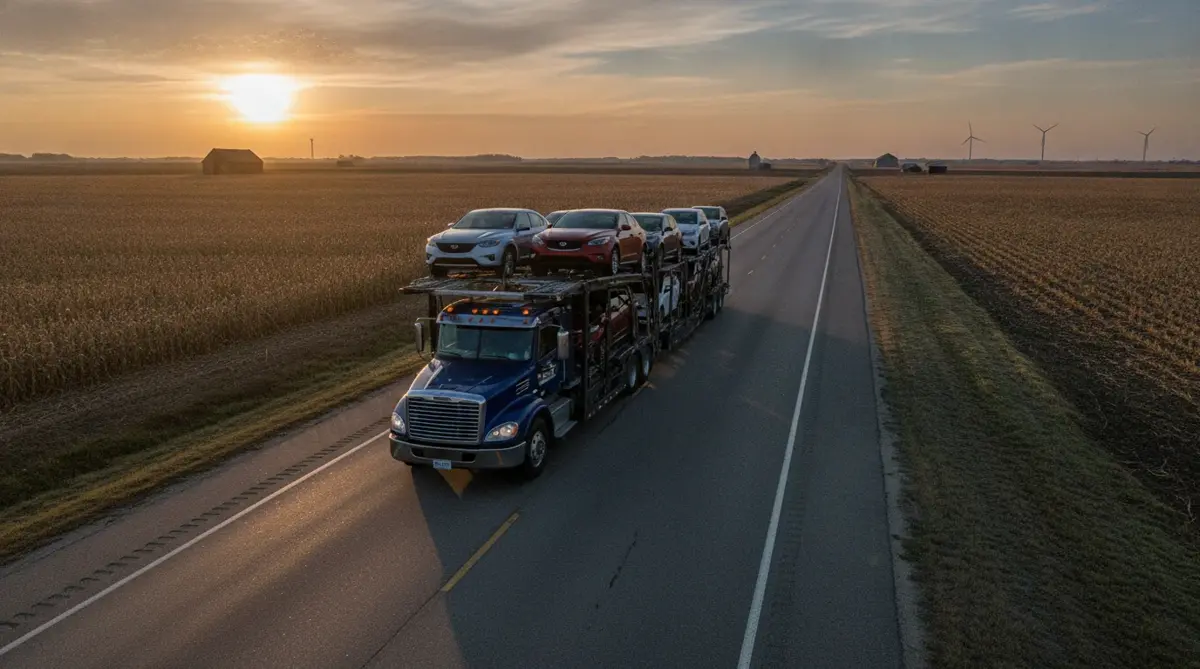
What's the Cheapest Way to Ship a Car Cross Country?
The cheapest way to ship a car cross country is open transport, booked early and outside peak season, with terminal pickup and delivery if the company offers it. For a complete breakdown, see our guide to the cheapest way to ship a car.
- Choose open auto transport. Open carriers hold more vehicles per trip, so the cost per car is lower.
- Ask about terminal-to-terminal service. Dropping off or picking up at a terminal instead of your front door saves the carrier time, which can mean a lower rate.
- Book at least two to three weeks before your ideal pickup date. Last-minute and expedited shipments carry a premium (our formula adds 20% for expedited).
- Avoid peak season if you can. June through August and the snowbird months (south in October and November, north in April and May) push rates up; December and January run lowest in our formula.
Is It Cheaper to Drive or Ship a Car Cross Country?
Shipping often costs about the same as driving once you add fuel, hotels, meals, wear and tear and your time, and you get your time back. Compare the estimate above with your own total cost of driving. If you love road trips, we get it. No judgment here.
| Cost or effect | Driving it yourself | Shipping it |
|---|---|---|
| Fuel | Miles divided by your car's mpg, times your local fuel price | Included in the estimate |
| Hotels and meals | About 3 to 4 nights and 3 to 5 days of meals | None for the car; you travel separately |
| Wear and tear | Tires, oil, brakes and depreciation from 2,500 extra miles | Zero miles on your odometer |
| Your time | 3 to 5 days behind the wheel | A few hours if you fly |
| Exposure on the road | Weather, breakdowns and accident risk for your own car | Less exposure; ask the company you book for its cargo insurance certificate |
Cross country shipping: about $1,430 – $1,930 for a standard sedan on an open carrier in November 2026 (estimate, not a quote)
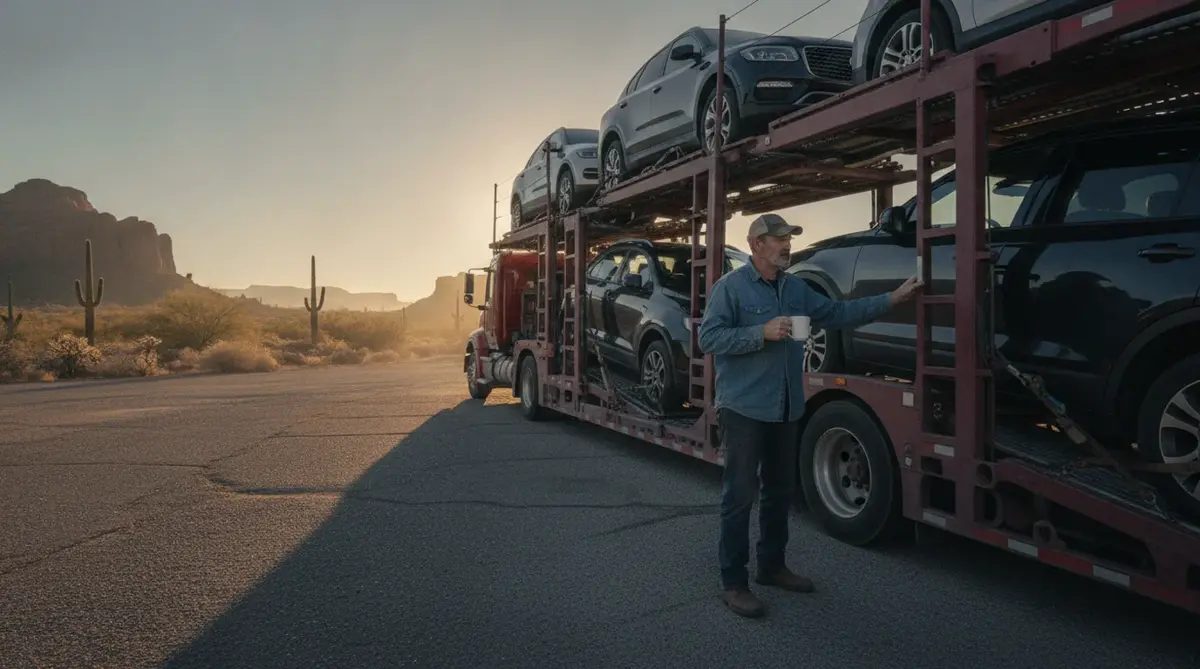
Cross Country Auto Transport FAQ
In November 2026, our published formula puts a standard sedan on an open carrier at $1,430 – $1,930 for a 2,500 mi coast-to-coast trip. It is an estimate, not a quote: the licensed auto transport company you choose sets the price, and it moves with vehicle size, open or enclosed transport, season and diesel.
For a 2,500 mi trip, the estimator shows 6 to 10 days from pickup to delivery. Shorter cross-country moves, such as about 1,000 mi, run 3 to 5 days. Weather and the company's route can change this.
Shipping is usually competitive once you add fuel, hotels, meals, wear and tear, and time off work to the drive. Compare the estimate range with your own total cost of driving.
Winter, especially December and January, typically sees the lowest rates in our formula. Summer (June to August) and the snowbird directions (south in October and November, north in April and May) run higher. The estimator page shows the month-by-month swing.
Yes. Enclosed trailers carry fewer cars and protect them from weather and road debris, so enclosed transport costs more than open transport on the same route. Open transport is the usual choice for a daily-driver car.
Tell the company when you request your estimate. A car that cannot drive onto the trailer needs a winch or forklift, which adds to the cost, and the company has to send the right equipment.
Ready to Ship Your Car Cross Country?
We've been helping people ship their cars across the country since 1999. Whether you're moving, buying, selling, or just need your vehicle somewhere else — we put it in front of licensed companies that compete for it.
Get your free estimate online in under 60 seconds, or call us at (800) 930-7417. We're here to help.
Have more questions? Check out our FAQ, browse auto transport by state, or learn about military car shipping if you're PCSing.