





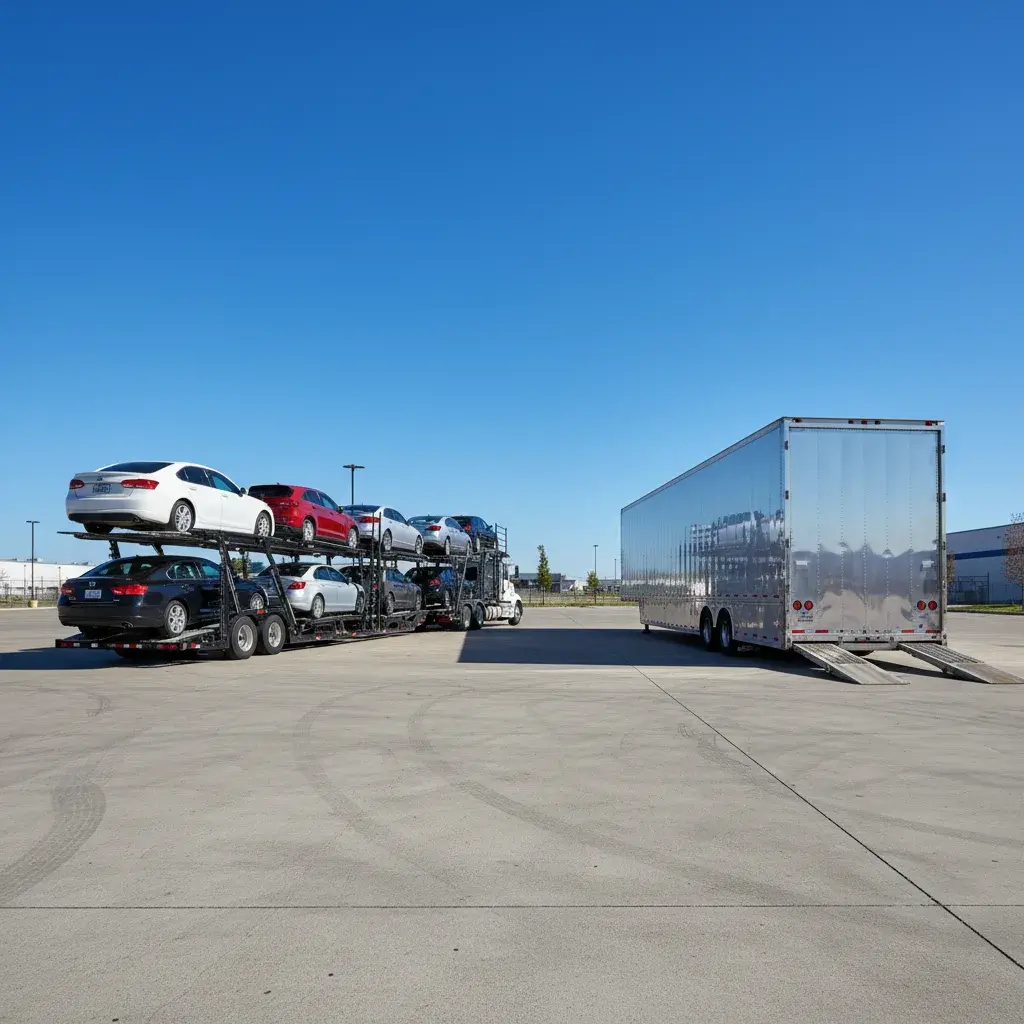
Open vs. enclosed -- it's the first real decision you'll make when shipping a vehicle, and it's one we get asked about every single day. After 27 years in the auto transport business, helping customers ship over 235,000 vehicles, we've helped customers make this choice tens of thousands of times. The answer isn't always obvious, and it depends on more than just your budget. Let's break down both options in detail so you can make the right call for your specific vehicle and situation.
Open transport is the industry standard. When you see a car hauler on the highway carrying 7-9 vehicles on an open multi-level trailer, that's open transport. About 90% of all vehicles shipped in the United States go open. The trailer has no walls, no roof -- vehicles are loaded onto upper and lower decks and secured with professional-grade ratchet straps and wheel nets. Your vehicle is exposed to the same elements it would encounter driving down any highway: weather, road dust, small debris. The key advantage of open transport is price and availability. Because open carriers are far more common than enclosed ones, there are more trucks available for your route at any given time, which means faster pickup windows and more competitive pricing.
Enclosed transport uses a fully enclosed trailer -- walls, roof, floor -- that completely protects your vehicle from weather, road debris, UV exposure, and visibility. Enclosed carriers typically haul 2-6 vehicles at a time (compared to 7-9 on open), which means each vehicle gets more space, more protection, and more individual attention. Enclosed trailers can be either hard-sided (metal walls) or soft-sided (heavy canvas or vinyl). Hard-sided trailers offer the highest level of protection and are preferred for the most valuable vehicles. The tradeoff is price: enclosed transport costs 40-60% more than open transport on the same route.
Let's put real numbers on the comparison. On a 1,000-mile route, open transport for a standard sedan runs roughly $700-$1,000. Enclosed on the same route: $1,000-$1,600. Coast-to-coast open transport: $1,000-$1,500. Enclosed: $1,600-$2,400. That's a meaningful difference -- $400-$900 more for enclosed, depending on the route. The question is whether that premium is justified for your specific vehicle. For a 2022 Honda Accord worth $25,000? Open transport is the clear choice. For a $150,000 Porsche 911 GT3? Enclosed is a no-brainer. The gray area is in between.
Here's our general guidance on when to choose enclosed transport. If your vehicle is worth over $75,000, go enclosed. The premium is small relative to the vehicle's value, and the protection is worth the peace of mind. Classic cars and vintage vehicles -- regardless of market value -- should go enclosed because replacement parts are often unavailable and original paint is irreplaceable. Exotic and sports cars (Ferrari, Lamborghini, McLaren, high-end Porsche, Corvette Z06) should go enclosed because low ground clearance, wide bodies, and carbon fiber components make them more vulnerable during open transport. Show cars or concours-quality vehicles should always go enclosed -- a single rock chip on a car you've spent years perfecting is devastating.
When is open transport the better choice? For the vast majority of vehicles on the road. If you're shipping a daily driver -- a sedan, SUV, crossover, pickup truck, minivan -- open transport is perfectly safe and saves you a significant amount of money. Your car is no more at risk on an open carrier than it is driving down the highway or sitting in a parking lot during a rainstorm. The carriers we work with are professionals -- they load, secure, and transport vehicles for a living, and they do it safely hundreds of thousands of times a year. The exposure to weather is cosmetic and temporary: your car might need a wash when it arrives, but it won't have damage from normal open transport.
There are some nuances worth understanding about open transport exposure. The biggest concern people have is road debris -- rocks kicked up by other vehicles on the highway hitting their car on the carrier. Here's the reality: the carrier trailer itself provides substantial protection. Vehicles on the lower deck are shielded by the upper deck above them. The lead vehicle on the upper deck has the most exposure, but even then, the carrier's cab and trailer structure deflect most debris. In our 27 years, damage from road debris on open carriers is extremely rare -- well under 1% of shipments. And when it does happen, carrier insurance covers it.
Another factor to consider: availability and timing. Open carriers are everywhere. There are roughly 10 open carriers for every enclosed carrier on the road. This means that when you book open transport, your vehicle gets matched with a carrier faster because there are simply more trucks available on your route. Enclosed transport can take longer to arrange, especially on less popular corridors, because there are fewer enclosed carriers and they're more selective about the loads they accept. If you need your vehicle moved quickly, open transport gives you the best chance of a fast pickup.
Enclosed transport offers additional benefits beyond weather protection. Many enclosed carriers use soft tie-downs and wheel cradles instead of the heavy-duty straps used on open carriers, which reduces the chance of any contact marks near the tie-down points. Enclosed carriers also limit the number of vehicles per load, so there's less chance of vehicles being parked in close proximity. And enclosed trailers typically have air-ride suspension, which provides a smoother ride -- important for vehicles with sensitive suspension systems or low-profile tires.
Here's one more consideration that most guides don't mention: insurance. Both open and enclosed carriers are required to carry the same minimum insurance coverage -- $750,000 in liability. However, many enclosed carriers carry higher cargo insurance limits because they routinely haul high-value vehicles. When booking enclosed transport, ask about the carrier's cargo insurance limit and whether it covers the full value of your vehicle. For vehicles worth over $200,000, you may want supplemental coverage -- ask the company you book with or a third-party insurer.
Our recommendation? If your vehicle is your everyday car, save your money and ship open. If your vehicle is special -- high value, classic, exotic, irreplaceable -- invest in enclosed transport. And if you're on the fence, call us. We've helped over 235,000 people make this exact decision, and we'll give you honest advice based on your specific vehicle and situation. There's no wrong answer here -- both methods are safe and professional. It's about matching the level of protection to the value of what you're protecting.
Key Takeaways
- •How much more does enclosed transport cost than open?
- •Is open transport safe for my car?
- •When should I choose enclosed transport?
Frequently Asked Questions
Enclosed auto transport typically costs 40-60% more than open transport on the same route. For example, if open transport on a 1,000-mile route costs $800, enclosed would run $1,100-$1,300. The premium covers the additional protection, smaller load capacity per trailer, and specialized equipment.
Yes. Open transport is the industry standard used for about 90% of all vehicle shipments. Your car is secured with professional-grade straps and wheel nets. Damage from road debris on open carriers occurs in well under 1% of shipments, and carrier insurance covers it when it does happen.
Choose enclosed transport for vehicles valued over $75,000, classic or vintage cars, exotic and sports cars, show vehicles, and any car with irreplaceable components or finishes. The premium is small relative to the value of high-end vehicles.
Ready to Ship Your Vehicle?
Get your free estimate in 60 seconds. American Auto Shipping has helped customers ship over 235,000+ vehicles since 1999.
Get a Free QuoteRelated Articles
How Much Does It Cost to Ship a Motorcycle? Open, Enclosed, and Crated Explained
Shipping a motorcycle isn't the same as shipping a car -- the method matters as much as the miles. Here's what open, enclosed, and crated transport actually cost, when each is worth it, and how to make sure your bike shows up the way it left.
Differences Between Open and Enclosed Auto Transportation Services
As you likely know by now, even if you're new to the car shipping scene, there are several different types of auto transport trucks on the road today, and not all of them provide the same type of services. While all of them will provide you door-to-door auto transportation, the protection that your ...
Classic Car Season Is Here — How to Ship Your Show Car Without the Stress
Car show season is ramping up, and if you’re shipping a classic, exotic, or show car, the stakes are higher than a regular transport. Here’s how to get your prized vehicle there safely — from choosing the right carrier to insurance and prep.
When to go with an Enclosed Transport
So many decisions must be made when it comes to transporting your vehicle. Whether it’s buying a new car, moving cross country, or transporting your college student’s car to a new city. One of the most important questions I get asked is “Which transport should I go with?”, open or enclosed. Open car...
More Guides
How to Ship a Car: The Complete 2026 Guide
A step-by-step walkthrough of the entire car shipping process, from getting your first quote to taking delivery. Everything you need to know to ship a vehicle in 2026.
Car Shipping Costs: Everything You Need to Know in 2026
A detailed breakdown of car shipping pricing by distance, vehicle type, transport method, and season. Learn what actually drives costs and how to avoid bait-and-switch quotes.
How Long Does It Take to Ship a Car?
Transit times by distance, factors that affect timing, pickup windows, and expedited options. Realistic timelines based on 27 years of shipping data.
First-Time Car Shipping: A Beginner's Guide
Everything a first-time vehicle shipper needs to know. Common mistakes to avoid, what questions to ask, red flags to watch for, and how to prepare.