





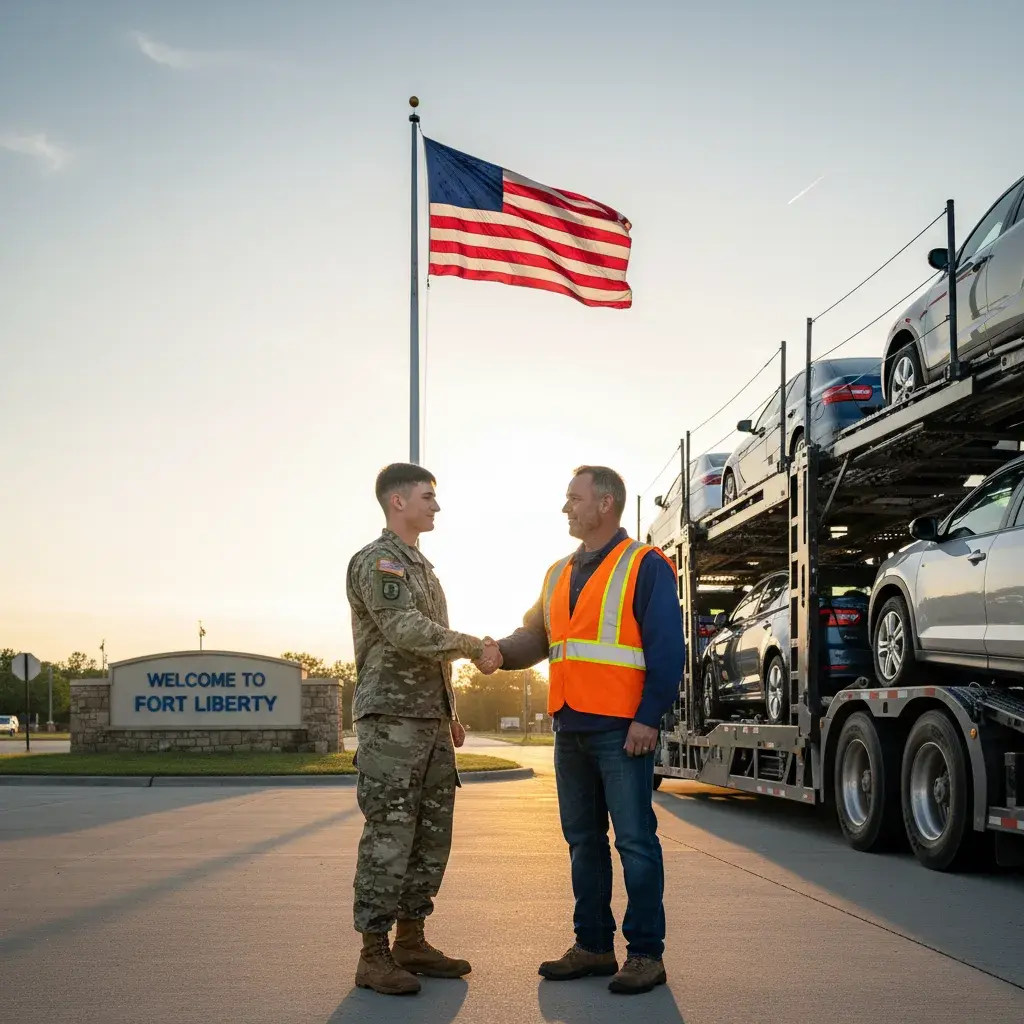
PCS season is always one of the busiest times at American Auto Shipping, and for good reason -- hundreds of thousands of service members and their families relocate every year on Permanent Change of Station orders. We've been working with military families since 1999, and we understand the unique challenges of shipping a vehicle during a PCS move. This guide covers everything you need to know: what the military pays for, what you're responsible for, CONUS vs. OCONUS shipping, timing around your orders, and how to make the process as smooth as possible.
Let's start with what the military covers. For CONUS (Continental United States) PCS moves, the military generally does not pay to ship your vehicle separately. Your vehicle is considered part of your personal property entitlement, and the military's assumption is that you'll drive it to your new duty station or include it as part of your household goods shipment. However -- and this is important -- if you're doing a DITY/PPM (Personally Procured Move), you can ship your vehicle privately and potentially claim partial reimbursement through your PPM allowance. The rules around this vary by branch and specific orders, so always check with your Transportation Office (TMO/PPO) before making assumptions about reimbursement.
OCONUS (Outside Continental United States) PCS moves are different. When you're assigned to an overseas duty station -- Germany, Japan, South Korea, Guam, Hawaii -- the military will typically ship one Privately Owned Vehicle (POV) at government expense through the Vehicle Processing Center (VPC). The government contracts with specific carriers for OCONUS vehicle transport, and you'll work through the VPC nearest your current location. Key points: the military covers one vehicle per service member, the vehicle must meet the destination country's requirements (size, emissions, steering side), and there are strict documentation requirements. Processing through a VPC can take 2-4 weeks before your vehicle even gets on a ship, and overseas transit adds 3-8 weeks depending on destination.
Here's where private auto transport fits into PCS moves. For CONUS moves, many military families choose to fly to their new duty station and ship their vehicle privately rather than driving cross-country -- especially when you're moving from Fort Bragg to Joint Base Lewis-McChord or from Camp Pendleton to Fort Hood and the drive would take 3-5 days each way. Private auto transport costs $700-$1,500 for a cross-country shipment, which can be competitive with the cost of gas, hotels, meals, and wear on your vehicle during a multi-day drive. When you factor in the time savings and reduced stress, it's often the better deal. And if you're doing a DITY/PPM move, the cost may be partially recoverable.
Timing is everything with PCS vehicle shipping. The summer PCS season (May-August) coincides with peak auto transport demand, which means higher prices and longer pickup windows. If you know your PCS dates in advance -- and you usually do, since orders typically come 60-90 days before your report date -- book your vehicle shipment as early as possible. Booking 3-4 weeks before your desired pickup date gives the companies the best chance of finding carrier availability at competitive pricing. Waiting until the last minute during peak PCS season is a recipe for stress and higher costs.
For military families doing a dual-vehicle PCS (both spouses have cars), the logistics get more interesting. Shipping two vehicles is always an option -- and many companies offer multi-vehicle discounts that can save you 10-15% compared to booking each separately. Alternatively, one spouse can drive one vehicle while the other flies, and the second vehicle ships. This is a common approach that balances cost savings with convenience. If you're shipping two vehicles, include both in one request so the companies can offer to put them on the same carrier -- it's more efficient and often faster.
Several of our partners offer military discounts, and they're genuine about them -- not the token $25 discount some companies offer just to check a marketing box. Mention your service when you get your estimate and ask each company about its military discount when you compare offers. When you request a quote, identify yourself as active duty, reserve, National Guard, or a military family member. The discount applies to all transport types -- open, enclosed, and expedited -- on any route.
Documentation and logistics tips specific to military PCS moves. Keep copies of your PCS orders -- some carriers and brokers may request them to verify military pricing. If your vehicle will be sitting at your current duty station while you travel to your new assignment, arrange a secure parking location and provide the carrier with access instructions. Coordinate pickup timing with your housing checkout or barracks clearance date. If your vehicle needs to arrive before you do at your new duty station, designate a trusted person (friend, fellow service member, family member) as your delivery contact -- they'll need to be present for the vehicle inspection and BOL signature.
For OCONUS returnees shipping a vehicle back to the U.S., the government handles the return shipment through the VPC system, but processing times can be unpredictable. Once your vehicle arrives at a stateside port, you'll need to arrange transport from the port to your new duty station or home of record. This is where private auto transport is essential -- the military's obligation ends when the vehicle reaches the U.S. port, and you're responsible for the final leg. The companies we work with regularly pick up from major Vehicle Processing Centers, and the company you book with can coordinate timing with your vehicle's arrival date.
Here's a PCS vehicle shipping checklist based on 27 years of working with military families. Sixty days out: review your orders and determine if you're driving or shipping. Contact TMO/PPO to understand your entitlements. Get quotes from reputable transport companies. Thirty days out: book your vehicle shipment. Clean your vehicle and start documenting its condition with photos. Begin removing personal items. Two weeks out: confirm your pickup window with the transport company. Finalize access instructions if you won't be present. Ensure your vehicle is mechanically sound -- starts, drives, brakes work. Day of pickup: have your keys ready, leave a quarter tank of gas, and be present for the BOL inspection. After delivery: inspect thoroughly, compare to your photos, and sign the BOL.
We know PCS moves are stressful -- you're managing housing, schools, family logistics, and a report date, all while serving your country. Vehicle shipping shouldn't add to that stress. American Auto Shipping has worked with military families for over two decades, and we understand the urgency, the timelines, and the unique requirements of military relocations. Get your estimate through us, mention your military service, and let the partner you choose take one thing off your plate.
Key Takeaways
- •Does the military pay to ship my car during a PCS move?
- •When should I book vehicle shipping for a PCS move?
- •Do car shipping companies offer military discounts?
Frequently Asked Questions
For CONUS moves, the military generally does not pay to ship your vehicle separately. However, DITY/PPM moves may allow partial reimbursement. For OCONUS moves, the military ships one POV at government expense through the Vehicle Processing Center system.
Book 3-4 weeks before your desired pickup date for the best availability and pricing. Summer PCS season (May-August) is peak demand, so booking early is especially important. If you know your PCS dates 60-90 days out, start getting quotes immediately.
Yes. American Auto Shipping offers meaningful military discounts for active duty, reserve, National Guard, and military family members on all transport types and routes. Identify your military status when requesting a quote.
Related Resources
Ready to Ship Your Vehicle?
Get your free estimate in 60 seconds. American Auto Shipping has helped customers ship over 235,000+ vehicles since 1999.
Get a Free QuoteRelated Articles
Military PCS Moves: Everything You Need to Know About Shipping Your Vehicle
PCS season is here, and if you’re a service member trying to figure out how to get your vehicle from your current duty station to your next one, this guide covers everything — from DITY move reimbursements to timing your shipment around orders.
Wildfire Season 2026: Move Your Vehicles Before the Evacuation Order, Not After
Fire agencies are calling for above-normal wildfire activity across California and the West this season. If you've got a second car, a classic, an RV, or a boat sitting at a property in fire country, the time to move it is before the evacuation order -- because once one drops, no carrier can come get it.
First-Time Car Shipper's Checklist: Exactly How to Prep Your Vehicle for Pickup
Shipping a car for the first time? A few minutes of prep prevents most of the problems we see. Here's the exact pre-pickup checklist -- fuel level, personal items, that spare key, and the photos that protect you -- so pickup day goes off without a hitch.
5 Mistakes That Delay Your Vehicle Shipment -- And How to Avoid Them
After helping customers with over 235,000 shipments, we've seen the same handful of preventable mistakes cause the vast majority of delays. Here's what they are and exactly how to avoid every single one of them.
More Guides
How to Ship a Car: The Complete 2026 Guide
A step-by-step walkthrough of the entire car shipping process, from getting your first quote to taking delivery. Everything you need to know to ship a vehicle in 2026.
Car Shipping Costs: Everything You Need to Know in 2026
A detailed breakdown of car shipping pricing by distance, vehicle type, transport method, and season. Learn what actually drives costs and how to avoid bait-and-switch quotes.
Open vs Enclosed Auto Transport: Which Is Right for You?
A head-to-head comparison of open and enclosed auto transport with pros, cons, pricing differences, and practical advice on when to use each method.
How Long Does It Take to Ship a Car?
Transit times by distance, factors that affect timing, pickup windows, and expedited options. Realistic timelines based on 27 years of shipping data.