





★ Key Takeaways
- ✓Across the 235,000+ shipments we've helped customers with since 1999, most delays come from a handful of avoidable customer mistakes, not carriers, weather, or breakdowns.
- ✓Standard car haulers are 75–80 feet, so on tight or gated streets you should meet the carrier at a nearby commercial lot.
- ✓Not disclosing an inoperable vehicle causes cancellations and rebooking that can add 5–10 days and $150–$300 for winch-equipped carriers.
- ✓Offering a flexible 3–5 day pickup window gets you picked up faster and pays 8–12% less than demanding an exact date.
- ✓Photograph every panel before and after shipping, and follow the bonus prep: quarter tank of gas, no personal belongings, disable aftermarket alarms.
We've been doing this since 1999, helping customers ship over 235,000 vehicles -- across every state, every season, every possible scenario you can imagine. And in all that time, the number one thing we've learned is that most shipping delays aren't caused by carriers, weather, or mechanical breakdowns. They're caused by a handful of completely avoidable mistakes that customers make before a truck ever shows up. That's not a knock on our customers -- most of these are things nobody tells you about until it's too late. Today we're laying out the five biggest delay-causing mistakes we see, how to fix each one, and a few bonus tips that'll make your shipment go as smoothly as possible.
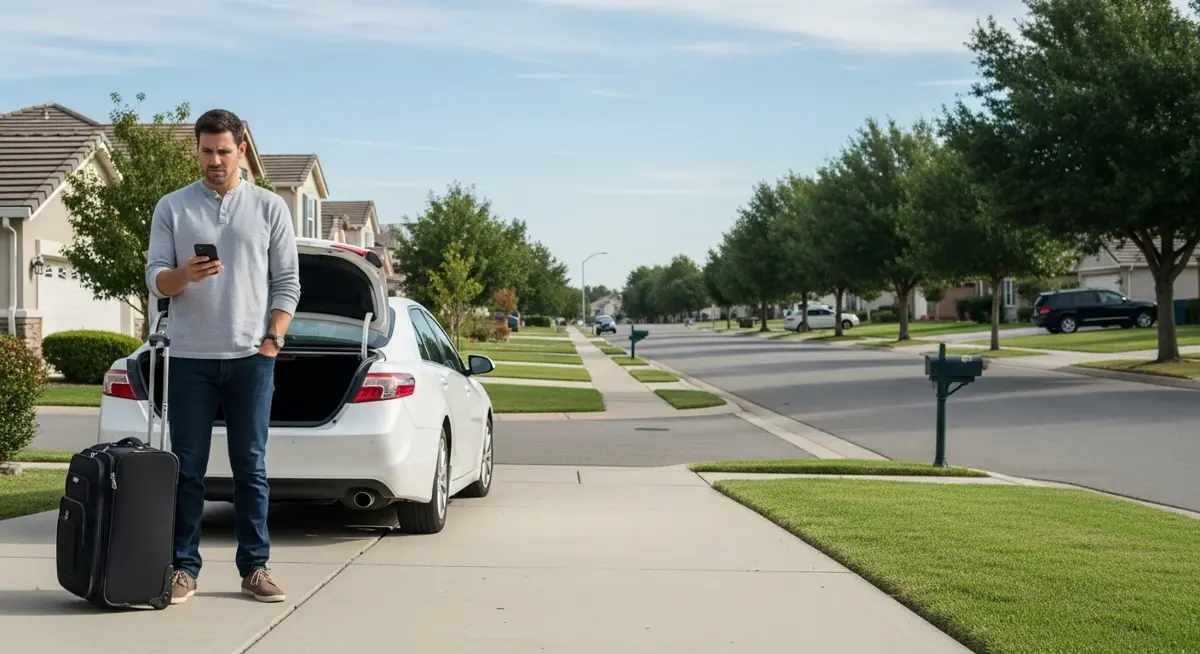
Mistake number one: giving an address the carrier can't actually access. This is far and away the most common issue we see -- and it's the one that surprises people the most. A standard car hauler is a 75-to-80-foot rig. That's not a UPS van. It can't navigate narrow residential streets, cul-de-sacs, roads with low-hanging tree branches, or gated communities with tight turns. We've seen carriers show up to addresses where there's literally no physical way to get the trailer within three blocks of the house. The driver calls the customer, nobody has a backup plan, and the pickup gets pushed back while everyone scrambles to figure out an alternative. The fix is simple: if you live on a tight street, in a gated community, or anywhere a semi-truck would struggle -- arrange to meet the carrier at a nearby shopping center parking lot, big-box store lot, or any open commercial area within a few miles. It takes five minutes of planning and saves you days of delay.
| Mistake | Why it delays your shipment | The fix |
|---|---|---|
| Inaccessible address | A 75–80 ft hauler can't reach narrow streets, cul-de-sacs, or gated communities | Meet the carrier at a nearby commercial or big-box parking lot |
| Not disclosing an inoperable vehicle | Standard carriers can't load a non-running car; rebooking adds 5–10 days and $150–$300 | State the vehicle condition honestly on your request so the offers come from winch-equipped carriers |
| Demanding an exact pickup date | Shrinks the carrier pool to those in your area that day | Offer a 3–5 day window to be picked up faster and pay 8–12% less |
| Missing the pickup window | Driver moves on and you go back to the queue, possibly another week in busy season | Have someone present with keys and access during the window |
| Not documenting condition | Leaves you unprotected and stuck in a he-said-she-said if damage occurs | Take timestamped photos of every panel before and after, and compare at delivery |
Mistake number two: not disclosing that your vehicle doesn't run. This one causes outright cancellations -- not just delays. When we say a vehicle is 'inoperable,' we mean it can't start, can't be steered, or can't be driven onto the trailer under its own power. Shipping an inoperable vehicle requires a carrier with winch equipment -- and not every carrier has it. When a customer books a standard shipment and the driver arrives to find a car that won't start, that carrier can't load it. The pickup gets cancelled. The shipment has to be rebooked with a different carrier who has the right equipment. That rebooking process can add 5-10 days to your timeline and typically costs $150-$300 more because winch-equipped carriers charge a premium. The fix? Say so upfront. When you fill out a request, there's a field for vehicle condition -- use it honestly. The companies making offers see it, so the one you choose can send a truck with the right equipment from day one and price it correctly. No surprises, no cancellations, no rebooking delays.
“Five things that take a combined 30 minutes of effort eliminate roughly 90% of the delays we see across the entire industry.”
Mistake number three: demanding an exact pickup date instead of a window. We understand the impulse -- you want to plan your schedule, you want certainty, and you want to know exactly when that truck is showing up. But here's the reality of how auto transport logistics work. A car hauler running from Los Angeles to New York isn't making a single pickup and a single delivery. That driver has seven to nine vehicles on the trailer, each with a different origin and destination along the route. Traffic, weather, other pickups and deliveries running behind schedule -- all of these ripple through the driver's timeline in ways that make pinning down an exact arrival hour nearly impossible. When you insist on a specific date -- say, 'It has to be picked up on June 12th and no other day' -- you're limiting yourself to only carriers who happen to be in your area on that exact date. That shrinks the pool dramatically. In our experience, customers who offer a flexible 3-5 day pickup window consistently get picked up faster and pay 8-12% less than those who demand exact dates. The math is straightforward: flexibility gives carriers room to work your vehicle into their existing route naturally, which means you get picked up sooner and at a better price.
Ready to ship? Get a real price in 60 seconds.
We put your shipment in front of licensed auto transport companies running your route this week, and they send you their best offers — no obligation, no spam.
Get My Free Quote →Mistake number four: missing the pickup window entirely. This is the one that makes carriers pull their hair out -- and we don't blame them. The carrier confirms a pickup window, drives to your location, arrives on time, and nobody's there. The vehicle is locked in a garage. Or the keys aren't available. Or the person who was supposed to be present had 'something come up.' Here's what happens next: the driver has a schedule to keep and seven other vehicles on the trailer with customers waiting for deliveries. That driver isn't going to park an 80-foot rig on your street for three hours hoping you show up. They move on. Your vehicle gets skipped, and you go back to the end of the queue for the next available carrier -- which during busy seasons could be another week or more. The fix is non-negotiable: someone must be present during the pickup window with the keys and access to the vehicle. If you can't be there personally, designate a trusted friend, family member, neighbor, or colleague. Give them the keys, brief them on the process, and make sure their phone number is on the booking so the carrier can reach them directly.
Mistake number five: not documenting your vehicle's condition before shipping. This one doesn't cause a shipping delay per se -- but it causes something worse. It leaves you completely unprotected if damage occurs during transit. And before you say 'carriers are insured, so I'm covered' -- yes, they are, and yes, you are. But filing a damage claim without documentation is an uphill battle. When the carrier arrives, the driver conducts a pre-load inspection and documents existing damage on the Bill of Lading. That's the carrier's documentation. You need your own. Take detailed, timestamped photos of every panel, the roof, the hood, the bumpers, every wheel, and the interior before the carrier arrives. Close-ups of any existing scratches or dents. Wide shots from every angle. Store them somewhere you won't lose them. When the vehicle is delivered, do the same thing again and compare. Across the 235,000+ shipments we've helped with, damage is genuinely rare -- but when it happens, the customers who documented everything get their claims resolved quickly and fully. The ones who didn't take photos are stuck in a he-said-she-said situation that nobody wins.
Bonus tip -- and this one covers three things people consistently overlook. First, leave only about a quarter tank of gas in the vehicle. Enough for the driver to start it, drive it on and off the trailer, and maneuver it at delivery -- but not so much that you're adding 100+ pounds of unnecessary weight. Every pound matters on a multi-car hauler, and some carriers will charge extra for a full tank. Second, remove all personal belongings from the vehicle. Carriers are licensed to transport vehicles, not household goods. Personal items aren't covered by carrier insurance, and loose items inside the car can shift during transit and cause interior damage. We've seen laptops, golf clubs, boxes of kitchen supplies -- take it all out. Third, disable any aftermarket alarms. A car alarm going off at 2 AM in a truck-stop parking lot is a headache for the driver and every other person within earshot. If you've got an aftermarket alarm system, disable it or leave clear instructions for the driver on how to silence it.
Here's how American Auto Shipping helps you avoid all of these delays in the first place. We are built around transparency and communication -- the two things that prevent problems before they start. When you get a quote, we put your specific shipment in front of licensed auto transport companies who are already routed through your area. That means faster pickup times because the carrier doesn't have to deadhead 200 miles to reach you. Every partner we are a disclosed agent for holds its own FMCSA authority and insurance, which you can verify on the FMCSA site before you book. If your vehicle is inoperable, the offers come from winch-equipped carriers. The offers you receive come directly from licensed auto transport companies, and the one you accept is the company you pay -- ask for its price in writing before you book. And the company you book with gives you its contact details and your driver's, so you know exactly who to call about pickup and delivery timing.
At the end of the day, shipping a vehicle is a straightforward process when you avoid these five mistakes. Give the carrier an accessible location. Be honest about your vehicle's condition. Offer a flexible pickup window. Be present when the carrier arrives. Document everything. That's it. Five things that take a combined 30 minutes of effort and eliminate roughly 90% of the delays we see across the entire industry. We've helped customers ship over 235,000 vehicles since 1999 and these same five mistakes have been causing the same problems for over two decades. Don't be the next one to learn the hard way. Get your free estimate and compare offers from vetted, licensed companies ready to move your vehicle without delays.
About the Author
American Auto Shipping
Dave Armstrong is one of American Auto Shipping's longest-tenured team members. As content manager and strategist, most of what you read on this website came from him. He has extensive knowledge of the auto transport industry, having spent time in every role the business has to offer.
Learn More About Auto Shipping
Shipping To or From These Areas?
Popular routes
Auto transport by city