





Preparing your car for transport isn't complicated, but it's one of those things where taking 30 minutes beforehand saves you a lot of headaches afterward. We've helped customers ship over 235,000 vehicles at American Auto Shipping, and the smoothest shipments -- the ones with zero issues at delivery -- almost always start with a properly prepared vehicle. This checklist covers everything you need to do before the carrier arrives, why each step matters, and a few pro tips from 27 years of experience.
Step one: remove all personal belongings. This is rule number one, and it's the one customers most frequently ignore. Carriers are licensed by the FMCSA to transport vehicles -- not household goods, not personal property, not loose items. If you leave items in your car, here's what can happen: they can shift during transport and damage your vehicle's interior, they can be lost or stolen (carriers are not responsible), and they add weight that can affect how the vehicle is secured on the trailer. The most commonly forgotten items: phone chargers, garage door openers, sunglasses, parking passes, toll transponders, dashcams, and aftermarket GPS units. Check the trunk, the glove box, the center console, under the seats, and the door pockets. If it's not permanently attached to the vehicle, take it out.
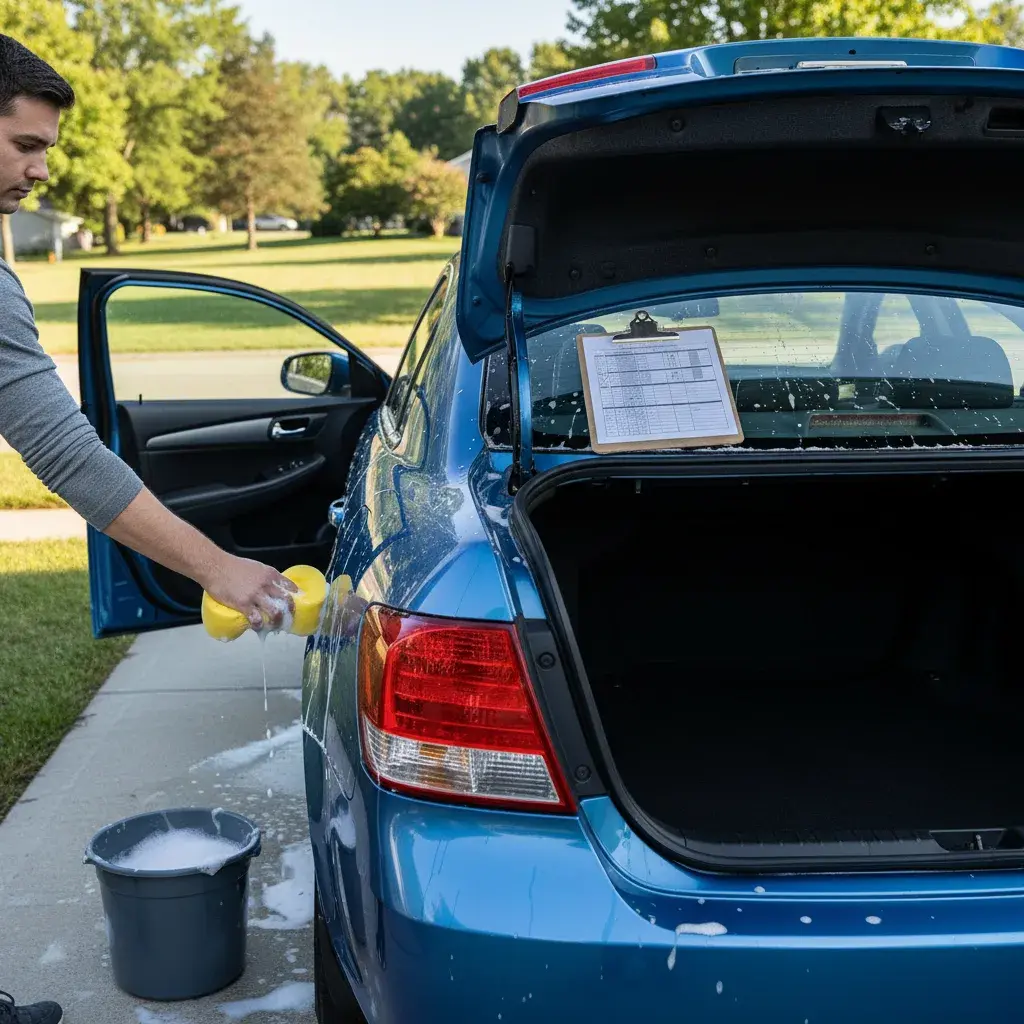
Step two: wash your vehicle exterior. This isn't about aesthetics -- it's about documentation. A clean car makes existing damage visible and easy to photograph. Dirt, grime, and road salt can hide scratches, dents, and paint chips that need to be documented before shipping. If the carrier's driver can't see existing damage because the car is filthy, and that damage becomes visible after delivery when the car is cleaned, you could have a dispute about whether the damage is new or pre-existing. A quick wash eliminates this problem entirely.
Step three: document the condition of your vehicle with photos. This is the most important preparation step, and we recommend going overboard. Take 20-30 photos minimum. Cover every panel: front, rear, both sides, roof, hood, trunk. Get close-ups of any existing damage -- scratches, dents, paint chips, wheel curb rash. Photograph the interior: dashboard, seats, center console, headliner. Take a photo of the odometer. Time-stamp your photos or email them to yourself so you have a verifiable record. These photos are your independent evidence of the vehicle's condition before shipping. The carrier driver will document condition on the Bill of Lading, but having your own photographic record provides an extra layer of protection.
Step four: check your vehicle's mechanical readiness. Your car needs to start, run, and drive for loading and unloading. The battery should be charged. Tires should be inflated to the recommended pressure (not overinflated, not underinflated -- the vehicle needs to roll onto and off the trailer smoothly). If your vehicle has a manual transmission, make sure the clutch is functional. If your vehicle is inoperable -- it doesn't start or doesn't drive -- you must tell us before booking. Non-running vehicles require carriers with winch equipment and cost $150-$300 more. Misrepresenting an inoperable vehicle as running causes major problems at pickup.
Step five: leave approximately one-quarter tank of gas. You don't need a full tank -- that's just unnecessary weight (a full tank of gas weighs 100-150 lbs depending on the vehicle). But you need enough fuel for the driver to start the vehicle, drive it onto and off the trailer, and maneuver it into position. A quarter tank is the sweet spot. If you're shipping across the country and the carrier encounters any routing changes, there's enough fuel to handle it without the driver needing to find a gas station.
Step six: disable aftermarket alarms and anti-theft systems. If you have an aftermarket alarm that triggers based on motion or vibration, it will go off during transport. A car alarm blaring at 2 AM in a truck stop rest area is a problem nobody wants. Factory-installed alarms that are integrated with the key fob are generally fine -- they arm and disarm with the key. Aftermarket systems with motion sensors, impact sensors, or tilt sensors need to be disabled or put in transport/valet mode. If you're not sure how to disable it, consult your alarm installer or check the manual. Leave a note for the driver explaining any alarm system quirks.
Step seven: remove or secure external accessories. Aftermarket spoilers, lip kits, and body kit components that aren't factory-installed can catch wind or snag during transport -- remove them if possible. Bike racks, cargo racks, roof boxes, and ski racks should come off. Retract or fold in the radio antenna. Fold in side mirrors (especially power-fold mirrors). Remove any toll transponders (E-ZPass, SunPass, TxTag) -- you don't want toll charges racking up while your car sits on a carrier passing through toll roads. Remove any magnetic signs, flags, or dealer plate frames that could fly off at highway speed.
Step eight: note any special instructions for the driver. If your vehicle has any quirks the driver should know about -- a sticky door handle, a trunk that needs to be closed a certain way, a parking brake that requires a specific technique -- write them down and leave a note in the vehicle or communicate them at pickup. If your car has been lowered or has reduced ground clearance, flag this when booking so the carrier can plan loading accordingly. If your vehicle has a manual transmission and the shifter is non-standard, the driver needs to know before trying to drive it onto the trailer.
Step nine: prepare for the pickup appointment. Be present for pickup if at all possible. Being there allows you to participate in the vehicle inspection, confirm the BOL documentation, ask the driver any questions, and hand over the keys. If you absolutely cannot be present, designate a trusted person with a signed authorization to release the vehicle. Provide clear access instructions: where the car is parked, any gate codes or access requirements, and contact information for your designated representative. The carrier driver is operating a 75-foot trailer -- make sure there's adequate room for the truck to access your vehicle's location.
Here's a quick-reference checklist you can save. Remove all personal items from interior and trunk. Wash exterior. Take 20-30 condition photos and email to yourself. Check battery charge and tire pressure. Leave quarter tank of gas. Disable aftermarket alarms. Remove external accessories (racks, transponders, magnets). Fold in mirrors and retract antenna. Note any special instructions. Be present for pickup with keys ready. That's it -- 30 minutes of preparation for a smooth, worry-free vehicle shipment.
Key Takeaways
- •Should I wash my car before shipping?
- •How much gas should I leave in the car for shipping?
- •Can I leave items in my car during shipping?
Frequently Asked Questions
Yes. Washing your car makes existing damage visible and easier to document in pre-shipping photos. A dirty car can hide scratches and dents, which could lead to disputes about whether damage is pre-existing or transport-related.
Leave approximately one-quarter tank of gas. This provides enough fuel for the driver to start the vehicle, drive it onto and off the trailer, and handle any maneuvering. A full tank adds unnecessary weight (100-150 lbs) and is not needed.
We strongly recommend removing all personal items. Carriers are licensed to transport vehicles, not personal property. Items left in the car are not covered by carrier insurance, can shift and damage the interior, and may be lost or stolen.
Related Resources
Ready to Ship Your Vehicle?
Get your free estimate in 60 seconds. American Auto Shipping has helped customers ship over 235,000+ vehicles since 1999.
Get a Free QuoteRelated Articles
First-Time Car Shipper's Checklist: Exactly How to Prep Your Vehicle for Pickup
Shipping a car for the first time? A few minutes of prep prevents most of the problems we see. Here's the exact pre-pickup checklist -- fuel level, personal items, that spare key, and the photos that protect you -- so pickup day goes off without a hitch.
Summer Shipping Is Coming: What to Expect and How to Prepare
Summer is the auto transport industry’s Super Bowl — demand peaks, prices climb, and lead times stretch. Here’s what 25+ years of navigating summer shipping seasons has taught me about getting your vehicle moved without overpaying or waiting forever.
Auto Shipping FAQ: How Can I Prepare for the Wait?
The auto transportation industry is a lot different than many of the other service-based jobs that are currently out there. The United States' economy is based heavily on retail and shopping and spending money, and a mindset that "the customer is always right." You hear it all the time, in cartoons,...
More Guides
How to Ship a Car: The Complete 2026 Guide
A step-by-step walkthrough of the entire car shipping process, from getting your first quote to taking delivery. Everything you need to know to ship a vehicle in 2026.
Car Shipping Costs: Everything You Need to Know in 2026
A detailed breakdown of car shipping pricing by distance, vehicle type, transport method, and season. Learn what actually drives costs and how to avoid bait-and-switch quotes.
Open vs Enclosed Auto Transport: Which Is Right for You?
A head-to-head comparison of open and enclosed auto transport with pros, cons, pricing differences, and practical advice on when to use each method.
How Long Does It Take to Ship a Car?
Transit times by distance, factors that affect timing, pickup windows, and expedited options. Realistic timelines based on 27 years of shipping data.