





★ Key Takeaways
- ✓Ship to a ski town in October or early November. Snow, pass closures and chain rules can add days once winter sets in.
- ✓A full-size car carrier often cannot reach steep or narrow mountain addresses, so expect to meet the driver in a nearby town or a large lot off the highway.
- ✓Colorado's I-70 Traction Law (Dotsero to Morrison) runs September 1 to May 31 and requires winter-capable tires or AWD/4WD with at least 3/16 inch of tread when in effect.
- ✓Put winter tires on, top up winter washer fluid and check the battery before pickup, so the car is ready the moment it is delivered.
- ✓In our published estimating method, a rural address adds about 10% and enclosed transport about 1.5 times the open price.
Every October we start hearing from people who are about to spend the winter somewhere with a chairlift. A ski instructor heading to Colorado for the season. A couple renting a condo in Utah from December to April. A college student starting a semester near the slopes in Vermont. They all want the same thing — their own car waiting for them in the mountains — and they all run into the same few surprises.
The first is timing. A mountain route is not just a long route; it is a long route that can close. Passes get snow, chain restrictions go up, and a driver who planned to be in a ski town on Tuesday can be waiting it out at the bottom of the hill on Thursday. That is why we tell people to ship in October or early November, before the heavy snow, rather than the week before opening day. By our published estimating method a 1,000-mile trip takes roughly 3 to 5 days in transit and a 2,000-mile trip roughly 5 to 8, on top of the pickup window — and winter weather only pushes those numbers one way.
| Decision | What we suggest | Why it matters |
|---|---|---|
| When to ship | October or early November | Before heavy snow, pass closures and chain rules slow the trip |
| Where to deliver | A spot a full-size carrier can reach | Steep or narrow mountain roads can be off-limits to a long rig |
| Tires | Winter tires fitted before pickup | Traction rules can apply on the first drive after delivery |
| Fluids and battery | Winter washer fluid, antifreeze check, healthy battery | Cold mornings find weak batteries fast |
| Open or enclosed | Open for most daily drivers | Enclosed avoids salt and grime but costs about 1.5 times as much |
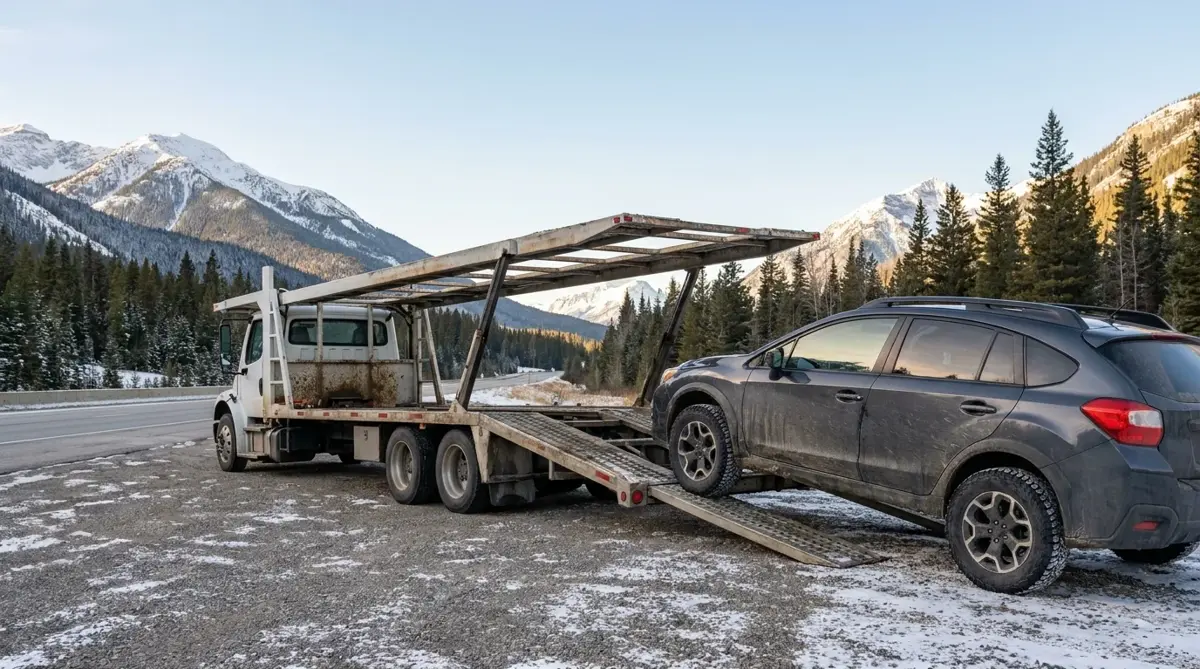
The second surprise is the delivery address. A full-size car carrier is a long, heavy rig, and plenty of mountain roads were never built for one — steep switchbacks, narrow streets, condo lots with low clearance and tight turns. Many towns also limit where large trucks can stop. Expect the driver to ask to meet somewhere a carrier can actually reach, such as a large parking lot in a nearby bigger town or right off the highway. Ask about this when you book, not when the truck is twenty minutes out.
“A mountain route is not just a long route; it is a long route that can close.”
Remote mountain addresses can also cost a little more to reach. In our published estimating method, a rural pickup or delivery adds about 10% to the estimate, because a driver has to leave the main route to get there. Meeting in a nearby town on the highway can bring that back down and usually gets your car delivered sooner.
Ready to ship? Get a real price in 60 seconds.
We put your shipment in front of licensed auto transport companies running your route this week, and they send you their best offers — no obligation, no spam.
Get My Free Quote →The third surprise is what the mountains ask of the car itself. Colorado, for example, enforces a Traction Law on I-70 between Dotsero and Morrison every year from September 1 through May 31: when it is in effect, passenger vehicles need snow tires, mud-and-snow tires or all-wheel or four-wheel drive, with at least 3/16 inch of tread. Other mountain states have their own chain and traction rules. Check the rules for where you are going and get the car ready before it ships, because the first time you need good tires may be the drive from the delivery spot to your rental.
That makes pre-shipment prep a little different from a normal move. If you are switching to winter tires, have them put on before pickup so the car arrives ready to drive. Top up the washer fluid with a winter blend, check the antifreeze and the battery — cold mornings find a weak battery fast — and leave about a quarter tank of fuel, no more. Take out loose items, ski racks you will not need on the way, and anything that could rattle or blow off.
Think about open versus enclosed for a winter trip. An open carrier is the usual choice and costs less, but in winter an open-deck car can arrive coated in road salt and grime. Enclosed transport keeps it clean and costs more — about 1.5 times as much in our published estimating method. For a daily driver, open transport and a car wash at the other end is often the sensible trade.
Delivery day in a ski town has its own rhythm. Try to schedule the hand-off in daylight, because snow, slush and a salt film can hide a scratch at dusk. Walk around the car, compare it with the photos you took at pickup, note every new scratch or dent on the Bill of Lading, and then sign. That signature is the record of the car's condition when it arrived, so take the five minutes even if it is cold.
How it works with us is simple. We put your shipment in front of vetted, licensed auto transport companies, they compete with their best offers, and you choose the one whose dates, delivery spot and price work for your season. You book directly with that company, and you never pay us a cent. Planning a winter in the mountains? Get your free estimate now and let the car get there before the snow does.
About the Author
American Auto Shipping
Dave Armstrong is one of American Auto Shipping's longest-tenured team members. As content manager and strategist, most of what you read on this website came from him. He has extensive knowledge of the auto transport industry, having spent time in every role the business has to offer.