




★ Key Takeaways
- ✓Flood-damaged cars are often cleaned up and resold far from where they flooded, so out-of-state buyers see more of them in the months after hurricane season.
- ✓Run the VIN through more than one source: NICB VINCheck (free), an NMVTIS title report and a paid vehicle history report.
- ✓Watch for title washing: a car recently titled in a storm-hit area and just moved and retitled in another state.
- ✓Get an independent pre-purchase inspection near the seller and ask for flood checks: musty smell, silt under the carpet, rusted seat rails, fogged lights, corroded connectors.
- ✓A car that can't roll on and off the trailer ships as inoperable, about 20% more in our published estimating method.
Every fall, after the storms move through, the same thing happens in the used-car market. Cars that sat in floodwater get dried out, detailed and listed for sale, and a lot of them don't stay where they flooded. They turn up hundreds of miles away, in states that never saw the storm, priced just low enough to look like a good deal. If you're buying a car out of state this season and planning to ship it home, the check you do before you pay matters more than anything that happens on the truck.
Here's why the timing is tricky. A flooded car can look perfect in photos, and it often runs fine for the first few weeks. Water damage shows up later — in the wiring, the computer modules, the airbag sensors and the brakes — usually after the car is already sitting in your driveway. And because buying out of state means you often never see the car in person before it ships, you're relying on paperwork and on someone else's eyes.
| Check | Where | What it tells you |
|---|---|---|
| NICB VINCheck | Free online | Whether participating insurers reported the car as a total loss or stolen |
| NMVTIS title report | Approved providers, a few dollars | Title brands such as salvage or flood from state motor vehicle agencies |
| Vehicle history report | Paid online | Title moves, auction records and where the car has been registered |
| Pre-purchase inspection | Independent mechanic near the seller | Silt, rust, fogged lights, corroded wiring and a musty interior |
| Start, steer and brake test | Before pickup | Whether the car ships as running or as inoperable |
Start with the VIN, and start with the free tools. The National Insurance Crime Bureau runs VINCheck, which shows whether participating insurers have reported the car as a total loss or stolen. The federal NMVTIS system collects title brands from state motor vehicle agencies, including salvage and flood brands, and approved providers sell reports for a few dollars. A paid vehicle history report adds service and auction records on top. None of these is perfect on its own, so run more than one.
“A low price on a car with a hidden flood history isn't a deal — it's a repair bill that hasn't arrived yet.”
Then watch for the trick that the history reports are built to catch: title washing. A car gets a flood or salvage brand in one state, then gets re-registered in a state with looser rules, and comes out with a clean-looking title. If the history shows the car was titled or registered in a storm-hit area within the last few months and has just been moved and retitled somewhere else, slow down and ask why.
Ready to ship? Get a real price in 60 seconds.
We put your shipment in front of licensed auto transport companies running your route this week, and they send you their best offers — no obligation, no spam.
Get My Free Quote →Next, get someone to put hands on the car. A pre-purchase inspection from an independent mechanic near the seller usually costs a couple of hundred dollars or less, and it's the best money you'll spend on a long-distance purchase. Ask them to look specifically for flood signs: a musty or heavily perfumed interior, silt or a waterline under the carpet and in the spare-tire well, rust on the seat rails and the screws under the dash, fogging inside the headlights and taillights, and corrosion on electrical connectors that should be clean on a car that age.
If the inspection or the history raises a question you can't get answered, walk away. A low price on a car with a hidden flood history isn't a deal — it's a repair bill that hasn't arrived yet. And once you've paid the seller and the car is on its way to you, it's yours.
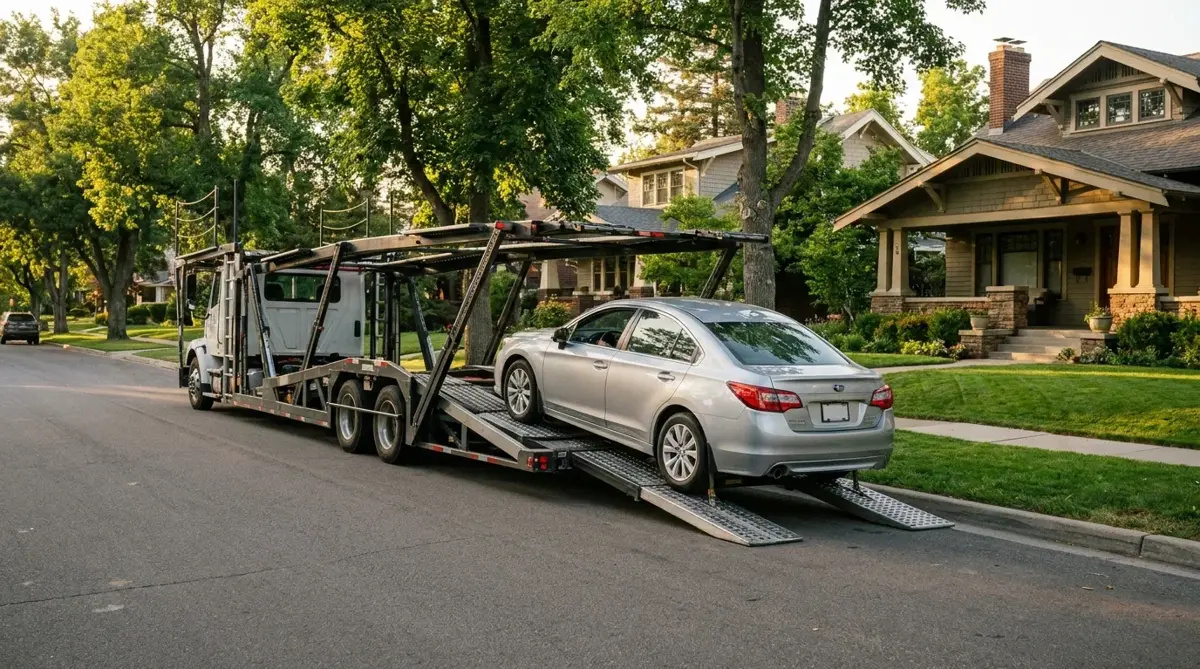
Once the car checks out, plan the shipment around what you learned. Make sure it starts, steers and brakes on its own before pickup. A car that can't roll on and off the trailer is shipped as inoperable, which needs a truck with a winch and costs more — about 20% more in our published estimating method. Ask the seller to leave it with about a quarter tank of fuel and nothing loose inside, and get the title and a signed bill of sale in hand before the driver arrives.
Pickup and delivery are where you protect yourself on the shipping side. At pickup, take dated photos of every panel, the roof, the wheels, the interior and the odometer — or ask the person releasing the car to do it for you. At delivery, walk around the car in good light, compare it to those photos, note every new scratch or dent on the Bill of Lading, and then sign. Your signature records the car's condition at delivery, so make it accurate.
How it works with us is simple. We put your shipment in front of vetted, licensed auto transport companies, they compete with their best offers, and you choose the one whose dates and price work for you. You book directly with that company, and you never pay us a cent. Found the right car? Check it first, then get your free estimate and compare offers.
About the Author
American Auto Shipping
Dave Armstrong is one of American Auto Shipping's longest-tenured team members. As content manager and strategist, most of what you read on this website came from him. He has extensive knowledge of the auto transport industry, having spent time in every role the business has to offer.