




If you’ve been following auto transport news at all this summer, you probably heard about the port fee drama. In late June 2025, the U.S. Trade Representative rolled back proposed port fees on foreign-built vehicle carrier ships. That might sound like a dry trade policy story, but trust me — this one had the entire auto shipping industry holding its breath for weeks. We’ve been doing this since 1999, and I can’t remember a proposed regulation that generated this much anxiety this fast.
Let me explain what was originally on the table. The USTR had proposed a fee structure that would have charged foreign-built vehicle carrier ships — the massive roll-on/roll-off vessels that transport thousands of cars across the ocean — up to $1.5 million per port call. The reasoning was to incentivize domestic shipbuilding and reduce reliance on foreign-built fleets, particularly Chinese-built vessels. On paper, it sounds like an industrial policy goal. In practice, it would have been catastrophic for vehicle imports and, by extension, for the domestic auto transport industry.
Here’s the math that had everyone panicking. A typical vehicle carrier ship holds 4,000–6,000 vehicles. If you slap a $1.5 million fee on the ship, that’s $250–$375 per vehicle in additional landing costs. That might not sound like a lot on a $60,000 luxury car, but on a $25,000 economy vehicle, it’s a meaningful price increase that gets passed directly to the consumer. Multiply it across the roughly 2 million vehicles imported by sea each year, and you’re talking about billions of dollars in added costs sloshing through the system.
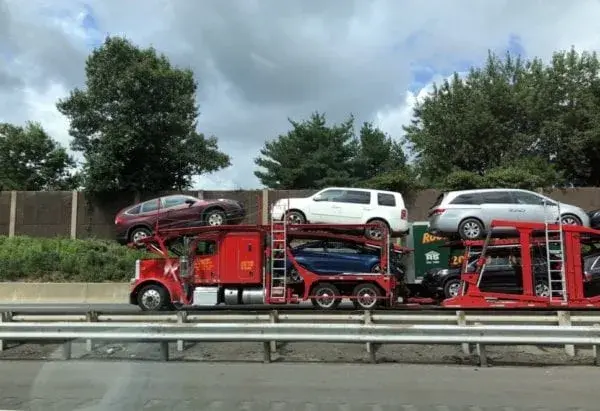
The auto transport side of the equation was even more concerning. If those fees had stuck, import volumes would have dropped significantly. Automakers would have reduced U.S. allocations, delayed shipments, or rerouted through Canadian and Mexican ports to avoid the fees. Any of those scenarios would have disrupted the flow of vehicles into the domestic transport pipeline. Fewer vehicles arriving at ports means fewer vehicles that need to be hauled to dealerships, fewer carrier loads, and a serious revenue hit for the thousands of small carriers who depend on port-origin freight.
Ready to ship? Get a real price in 60 seconds.
We put your shipment in front of licensed auto transport companies running your route this week, and they send you their best offers — no obligation, no spam.
Get My Free Quote →The uncertainty alone caused real problems. Between the time the fees were proposed and the rollback, we saw carriers hesitate to commit to port-area routes. Why book a run from Baltimore to Charlotte if you’re not sure there will be cars to haul next month? Shipping lines started adjusting their schedules. Some delayed sailings. Import volume at East Coast ports dipped measurably in early June as everyone waited to see what would happen. That temporary dip created a ripple effect — dealers had fewer cars on their lots, which meant fewer dealer-to-dealer trades, which meant less transport demand overall.
When the rollback came in late June, the relief was immediate but the recovery wasn’t instant. You can’t just flip a switch and undo weeks of scheduling disruption. Ships that were delayed started arriving in clusters, creating port congestion that took weeks to clear. Carriers who had repositioned away from port routes needed time to come back. The result was a messy July where some routes were flooded with vehicles and others were oddly quiet. We’re still seeing the aftershocks of that now.
There’s a lesson here for anyone who ships vehicles regularly: trade policy doesn’t have to actually change to affect your transport experience. Just the threat of change is enough to disrupt pricing, timing, and carrier availability. When the USTR floated those fees, our phones started ringing with dealers asking if they should stockpile inventory before the fees kicked in. Carriers were calling asking if they should lock in contracts at current rates. Everyone was trying to front-run a policy that ultimately didn’t happen.
For individual shippers — people just trying to move their car from point A to point B — the practical impact was mainly felt in lead times and pricing volatility during June and early July. If you booked a shipment during that window and it took a few extra days, the port fee uncertainty was likely a contributing factor. Things have largely normalized now, but if you’re shipping from or to a port city, it’s worth asking your transport company whether any policy changes are affecting availability on your route.
The bigger picture here is that the auto transport industry is deeply connected to global trade flows. We’re not just moving cars around the country in a vacuum. Every tariff, every port regulation, every trade agreement has downstream effects on carrier capacity, route pricing, and delivery timelines. At American Auto Shipping, we monitor this stuff constantly because it directly affects the estimates we publish and the offers you get. If a policy shift is going to impact your shipment, we’d rather tell you upfront than surprise you later.
Looking ahead, the port fee issue isn’t fully resolved. The USTR rolled back the fees on vehicle carriers specifically, but broader port fee proposals targeting other types of foreign-built vessels are still being discussed. If those go through, they could still create congestion and scheduling disruptions at major ports that affect vehicle transport indirectly. We’re watching it closely.
My advice right now is straightforward: if you’re planning a shipment, book it. Don’t try to time the market based on trade policy rumors. The rollback has stabilized things for now, and rates are returning to normal seasonal patterns. At American Auto Shipping, our estimate ranges update with this week’s diesel price and the season, and the offers come from companies pricing today’s market — not what might happen next month. Get your free estimate, compare the offers, and book with the company you choose. We’ve been helping customers through every policy twist and turn this industry has seen for over two decades.
About the Author
American Auto Shipping
Dave Armstrong is one of American Auto Shipping's longest-tenured team members. As content manager and strategist, most of what you read on this website came from him. He has extensive knowledge of the auto transport industry, having spent time in every role the business has to offer.
Learn More About Auto Shipping
Shipping To or From These Areas?
Auto transport by city