





The short answer
When you buy a used car online from another state, you can usually take the seller's own delivery or transfer, pick the car up yourself, or have it shipped by a transport company you book. Check the return window and when it starts, because it can be short and transfer or shipping fees may not come back if you return the car. Then plan the tax, registration and inspection for your home state before the car arrives.
★ Key Takeaways
- ✓Read the return terms before you pick a delivery option. CarMax now offers a 10-day money-back guarantee, and its FAQ says shipping fees paid to transfer a car are separate from the purchase and nonrefundable (some may be refundable in California).
- ✓Seller delivery has limits: CarMax says its home delivery is available within a 60-mile radius of select stores and not in every state, so a car three states away usually needs a transfer, a trip or a shipment.
- ✓Kelley Blue Book reported in 2024 that CarMax cut its guarantee from 30 days to 10 and that Carvana offers a 7-day return policy. A short window leaves little time if the car is still on a truck.
- ✓Sales tax usually follows where you register the car, not where you buy it, and many states expect registration within about 30 days, so line up the paperwork before the car arrives.
- ✓Run the VIN for title, odometer and open recalls, and get an independent inspection when you can't see the car first.
We've been in auto shipping since 1999, and more of the cars we see now were bought on a screen. Online used-car sellers have made the buying part easy: you pick the car, sign, and pay from your couch. Getting it home from another state is the part that still takes a plan, and the plan starts with one question most buyers skip. How long do you have to change your mind, and when does that clock start?
Start with the return terms, because they decide which delivery option makes sense. CarMax's own FAQ now says it offers a 10-day money-back guarantee: as long as the car's condition matches when you bought it, you can bring it back within 10 days to the store where you bought it. That used to be longer. Kelley Blue Book reported in April 2024 that CarMax was cutting its guarantee from 30 days to 10, and that rival Carvana offers a 7-day return policy. Return policies change, so read the current terms on the seller's site before you pay, and ask when the window starts: at purchase, at pickup or at delivery.
| Seller's delivery or store transfer | You pick it up | You book a transport company | |
|---|---|---|---|
| Who moves the car | The seller, on its schedule | You drive it home | A licensed auto transport company you choose |
| Distance limits | Often a set radius or select stores | None, but every mile goes on the car | Usually door to door, where a truck can reach |
| Return window | Check when it starts; transfer fees may not come back | Starts when you take the car | Ask the seller whether it starts at release or at delivery |
| What to check | Fees due up front and the delivery terms in writing | Temporary tag length and legal driving range | Release paperwork, pickup hours and the Bill of Lading at both ends |
Then read the fee line. CarMax says shipping fees paid to transfer a vehicle are separate from the purchase and nonrefundable, though some may be refundable in California, and that store-to-store shipping fees are due in advance of delivery. So if you return the car, the car's price comes back, but the cost of moving it to you may not. That's not a reason to avoid the transfer. It's a reason to know the number before you agree to it, and to compare it with the other ways to get the car home.
“With an online car, the clock that matters isn't the shipping time. It's the return window, and you want the car in your hands while it's still open.”
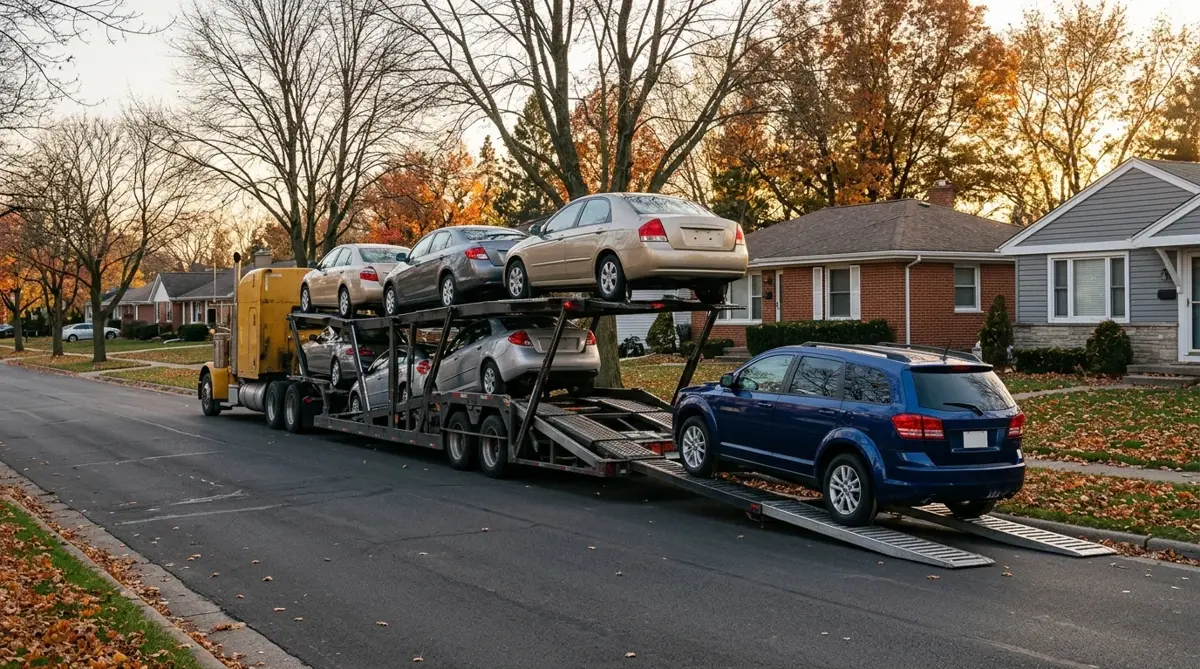
Know the limits of the seller's own delivery, too. CarMax says its home delivery is available within a 60-mile radius of select stores and isn't available to customers in every state. Buy a car that sits three states away, and you're usually choosing between three options: pay the seller to move it to a store near you, fly out and drive it home, or have it shipped from the seller's lot to your door by an auto transport company you book yourself. Our table lays the three side by side.
Ready to ship? Get a real price in 60 seconds.
We put your shipment in front of licensed auto transport companies running your route this week, and they send you their best offers — no obligation, no spam.
Get My Free Quote →Before you choose, check the car itself like any car you can't see. The FTC says used-car dealers must post a Buyers Guide that tells you whether the car comes with a warranty or is sold as is, so ask for a photo of it. Run the VIN at vehiclehistory.gov for title and odometer information, and look it up on NHTSA's recall site. NHTSA says open recalls are fixed free at the automaker's dealer, which is easier to arrange before the car leaves. The FTC also suggests an independent mechanic's inspection, and that matters more when you won't drive the car first. If the seller offers a test-drive or return period instead, plan your inspection inside it.
Ask how the deal handles a late car. For a true online purchase, the FTC says dealers must give you the option to cancel and get a prompt refund if the car doesn't ship on time. Separately, the FTC says federal law doesn't require dealers to give you three days to cancel and return a car, though some states require a right to cancel. Put the two together and the lesson is simple: whatever the seller promises about delivery dates and returns, get it in writing before the money moves.
Now the paperwork at home. Edmunds puts it plainly: you pay sales tax based on where you register the car, not where you buy it, and you'll often have to register within 30 days of purchase or pay a fine. Ask the seller exactly what it will collect and what it sends you, then check with your own state. Credit Karma notes you may need a VIN verification form, and each state sets its own emissions rules. California is the one to watch: its DMV says a vehicle with fewer than 7,500 miles at purchase counts as new and must be certified to California smog rules to register there.
If you pick the car up yourself, a temporary registration usually lets you drive it home. Edmunds says to ask how long it lasts, and PNC says to confirm it's legal to drive that far on temporary tags. For a short trip that can be the easy answer. For a long one, count the flight, the motel nights, the fuel, the days off work and the miles you put on a car you may still return. Every mile you drive counts against the condition the seller expects back, and some return policies have had mileage limits before.
If you ship it yourself, the order matters. Confirm with the seller that the car is paid for and released, who signs it out, what hours the lot keeps and how long the car can wait before a storage fee starts. Give the company you book the seller's address, a named contact and the release paperwork. Treat pickup as a window, not an appointment, since drivers' hours and weather move things, and don't take a fixed date from anyone as a promise. If the return window is short, ask the seller whether it starts at release or at delivery before you book. Our guide to reading a quote shows which lines to check, and you can look up any company's USDOT or MC number free on FMCSA's SAFER Company Snapshot.
Delivery day is your first real look at the car, so take your time. Inspect it in good light, check the VIN against your paperwork, compare it with the listing photos and note anything new on the Bill of Lading before you sign. Our delivery-day guide walks through it. If something is wrong with the car itself, take it to the seller while the return window is open. If the car picked up damage on the truck, take it to the transport company you booked. Then take the title paperwork and the purchase contract to your DMV before the temporary registration runs out. For private-seller deals, our out-of-state private seller guide covers the extra steps.
Here's how it works with us. We put your shipment in front of vetted, licensed auto transport companies, they compete with their best offers, and you choose the one whose price, dates and terms fit you best. Tell us where the seller's lot is and your delivery ZIP, and you never pay us a cent. Get your free estimate before you sign, so you can set the seller's transfer fee next to real offers and know the whole cost of the car.
Frequently asked questions
Does the return window start when I buy the car or when it's delivered?+
It depends on the seller, so ask before you pay and get the answer in writing. CarMax, for example, offers a 10-day money-back guarantee and says you return the car to the store where you bought it.
Do I get the shipping or transfer fee back if I return the car?+
Often not. CarMax says shipping fees paid to transfer a vehicle are separate from the purchase and nonrefundable, though some may be refundable in California. Check your seller's current terms.
Which state's sales tax do I pay on a car bought online from another state?+
Usually your own. Edmunds says sales tax is based on where you register the car, not where you buy it. Ask the seller what it will collect and confirm with your state.
Is it better to use the seller's delivery or book my own shipping?+
Compare both. A seller's delivery may only cover a set radius or select stores, so for a car several states away, set its transfer fee and timing next to offers from transport companies and pick what fits.
How much does it cost to ship a car I bought online?+
It depends on the distance, the route, the season, the vehicle and open or enclosed transport. Get a free estimate with the seller's ZIP and yours, and the real price comes from the company you book with.
Sources
- What is CarMax's return policy? — CarMax
- Can I buy a car online from CarMax? — CarMax
- CarMax Trimming Money-Back Guarantee to 10 Days — Kelley Blue Book (2024)
- What to know when buying a used car online — Federal Trade Commission
- Buying a Used Car From a Dealer — Federal Trade Commission
- Used Cars — Federal Trade Commission
- Consumer Alert: Repair Your Safety Recalls Now — NHTSA
- Buying a Car Out of State — Edmunds
- Buying a Car Out of State: What You Need to Know — PNC
- Your guide to buying a car out of state — Credit Karma
- Buying a Vehicle From Out of State: Can You Register It in California? — California DMV
- SAFER Company Snapshot — FMCSA
- How Online Car Buying Is Driving Record Auto Transport Demand — American Auto Shipping
- Buying a Car Out of State From a Private Seller — American Auto Shipping
- How to Read an Auto Transport Quote: 7 Lines to Check Before You Book — American Auto Shipping
- Delivery Day: The Ten-Minute Inspection That Decides Whether a Damage Claim Gets Paid — American Auto Shipping
About the Author
Written by the American Auto Shipping team, in auto shipping since 1999. Prices and transit times in our posts are estimates from our published method; the real price comes from the company you book with.