





★ Key Takeaways
- ✓Drive-away is usually the cheaper option per mile on a long move, because the RV carries itself instead of occupying a trailer.
- ✓Drive-away adds real miles to the odometer and real wear to the drivetrain -- the deciding factor on a newer or high-value unit.
- ✓Towable RVs -- travel trailers and fifth wheels -- are not a choice at all. They are hitched and towed, which is its own category.
- ✓Hauling on a trailer is the only option for a non-running unit, and the right one for anything rare, restored or being sold on condition.
- ✓Height governs routing more than weight does. Most RVs sit near the legal ceiling, so clearance and permits shape the route and timeline.
An RV is not really one shipping problem. It is two, and which one you have depends on whether the thing has an engine in it.
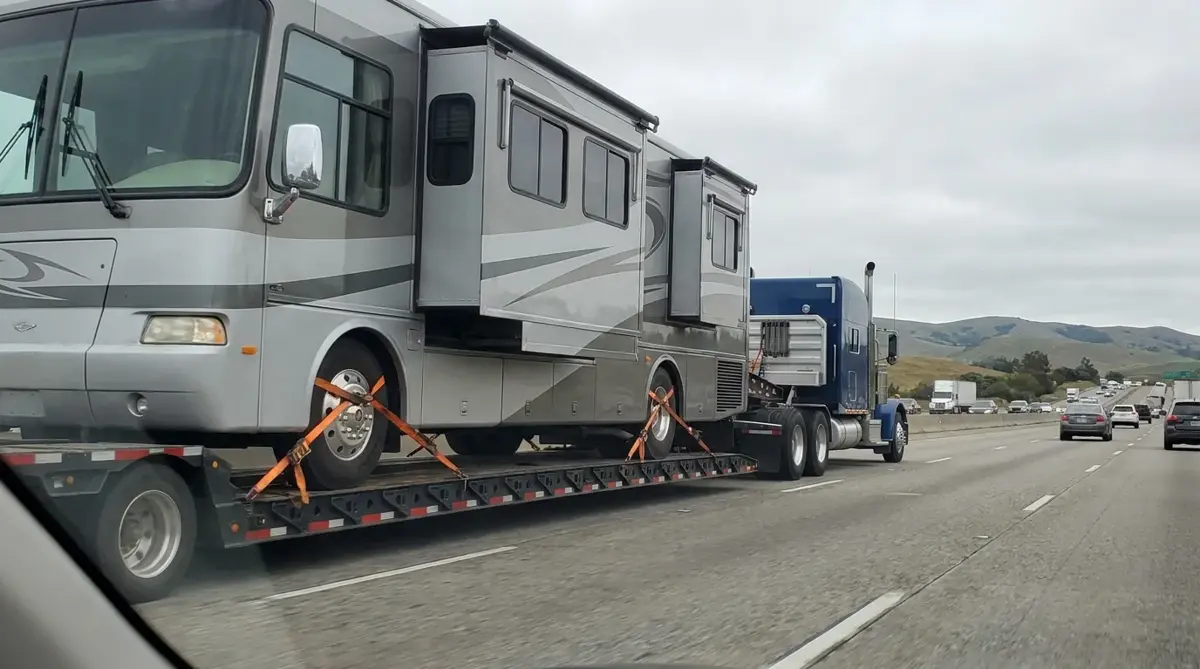
If it is a motorhome -- a Class A, B or C, something you sit in and drive -- you have a genuine choice. Either a qualified driver gets in and drives it to the destination, which the industry calls drive-away, or it goes on a trailer and gets carried. If it is a travel trailer or a fifth wheel, there is no engine and no choice: it gets hitched to a suitable truck and towed. That is a different service with a different pool of carriers, and it is worth saying up front so nobody wastes time comparing the wrong things.
| RV type | Usual method | The tradeoff to weigh |
|---|---|---|
| Class A motorhome, running | Drive-away or haul | Cheaper to drive; adds miles to a costly drivetrain |
| Class B or C, running | Drive-away or haul | Easiest category, both options price reasonably |
| Any motorhome, not running | Haul only | Trailer or lowboy, priced by size and weight |
| Travel trailer | Tow-away | No engine to worry about; hitch and brakes matter |
| Fifth wheel | Tow-away, gooseneck truck | Smaller pool of equipped carriers |
| Rare, restored or high-value | Haul, enclosed if available | Costs most, protects condition and odometer |
For motorhomes, drive-away is usually the cheaper number, and the reason is simple physics. A Class A on a trailer occupies an enormous amount of a carrier's capacity and weight allowance for one unit of revenue. Driven, it carries itself. The carrier is providing a driver and their time rather than a truck, a trailer and the space that could have held several cars. On a long move that difference is substantial.
“The question is not which method is cheaper. It is whether you would rather spend money or spend miles.”
The cost of that saving is miles. Real ones, on the odometer, with real wear underneath them. A cross-country drive-away can put two to three thousand miles on a vehicle in under a week, along with the tyre wear, the fluid cycles and the general ageing that comes with them. On a fifteen-year-old motorhome that already shows six figures, nobody cares. On a two-year-old Class A that cost as much as a house deposit, those miles come directly off the resale value, and they can easily exceed what hauling would have cost in the first place.
Ready to ship? Get a real price in 60 seconds.
We put your shipment in front of licensed auto transport companies running your route this week, and they send you their best offers — no obligation, no spam.
Get My Free Quote →That is the whole decision, really. Not which is cheaper, but whether you would rather spend money or spend miles. We have seen people agonise over a few hundred dollars of difference on a unit where the added mileage was worth several times that, and we have seen people pay to haul a tired old coach that would have been perfectly happy driving itself.
Some cases remove the choice entirely. If the RV does not run, it has to be hauled -- nobody is driving away a vehicle that will not start, and getting a non-running unit onto a trailer is itself a job requiring a winch and some patience. Anything rare, restored, or being sold on the strength of its condition should also be hauled, because the point of the exercise is that it arrives exactly as it left. And if the buyer is paying for a specific odometer reading, driving it there defeats the purpose.
Height is the constraint people forget. Most RVs sit close to the legal ceiling of around 13 feet 6 inches, which is fine until you put one on a trailer and add the trailer deck underneath it. That combination can push past what standard routing allows, which means either a specialised low-deck trailer or a permitted route that avoids low clearances. It is one of the main reasons haul quotes on large motorhomes vary so much between carriers -- some have the right equipment for it and some are pricing in a workaround.
For drive-away specifically, there is paperwork worth sorting before anyone quotes. The vehicle needs to be roadworthy, currently registered and insured for the trip, with working lights, decent tyres and brakes that will pass a roadside inspection. Carriers will check. A drive-away that gets pulled over and put out of service halfway becomes an expensive recovery job, so the good operators are strict about this, and that strictness is a sign you have picked a good one.
Practically, the way to approach it is to decide the method first and then shop it, rather than asking for a price and letting the answer decide for you. Work out what the miles are worth on your particular unit -- that is a number only you know -- and then post the job for that method and see who bids. RV work concentrates among carriers with the right equipment and the right drivers, and there are fewer of them than there are car haulers. Seeing which ones want your route is the whole value of putting it out to a market rather than making one phone call.
Either way it gets there. The difference is what the odometer says when it arrives, and how much you paid to control that.
About the Author
American Auto Shipping
Dave Armstrong is one of American Auto Shipping's longest-tenured team members. As content manager and strategist, most of what you read on this website came from him. He has extensive knowledge of the auto transport industry, having spent time in every role the business has to offer.