





★ Key Takeaways
- ✓Every shipment has two separate time frames: the pickup window (often one to five business days) and the transit time on the road.
- ✓A 2,000-mile move typically runs about 5 to 8 days in transit by our published method, before you add the pickup window.
- ✓Shipping ahead of you only works if someone can meet the driver at the other end or the car can wait at a terminal.
- ✓Shipping after you is usually the easiest: you fly, the car follows, and you only need a rental car for the gap.
- ✓Keep the car empty. Personal items inside a shipped car are not covered by the carrier's cargo insurance.
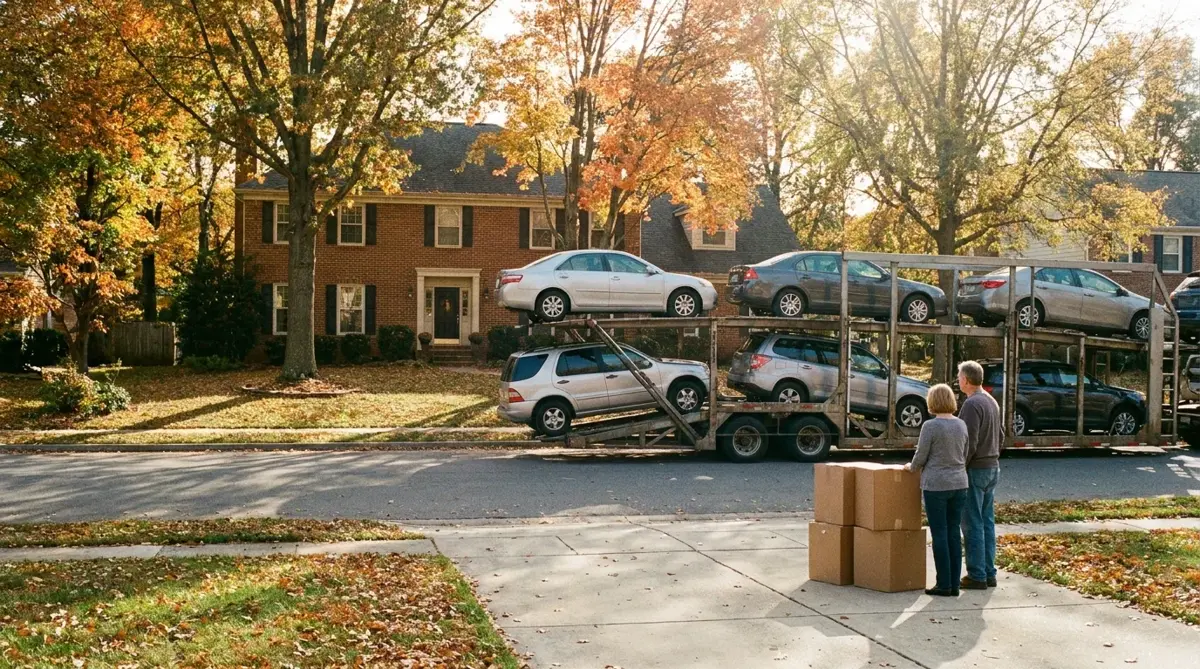
Fall is one of the busiest moving seasons of the year, and every fall we hear the same question from people relocating across the country: should the car go before us, with us, or after us? There is no single right answer, but there is a right answer for your move, and it comes down to three things — when you need the car, who can hand it over, and who can receive it.
Start with how car shipping time actually works, because it is two numbers, not one. First is the pickup window: the stretch of days in which the driver will arrive to collect the car, often one to five business days from the date you ask for. Second is transit: the time the car spends on the truck. On our how-we-estimate page we publish the formula we use for transit, and for a 2,000-mile move — about the distance from Los Angeles to Chicago — it works out to roughly 5 to 8 days on the road. Add those together and you can see why planning the car around a hard move-out date takes a little room.
| Option | Works best when | Watch out for |
|---|---|---|
| Car ships before you | Someone at the destination can accept it, or it can wait at a terminal | No one there to sign at delivery; storage fees if the car waits too long |
| Car ships the week you move | You drive the moving truck or fly out the same week | Being without a car at both ends while it is on the road |
| Car ships after you | You fly and can rent a car for a week or two | Rental cost for the gap; leaving the keys with someone reliable at pickup |
| Two cars in one move | Both can be ready at the same address on the same day | Pickup at two different addresses is usually two separate stops |
Option one is shipping the car ahead of you. This makes sense when someone is already at the destination — a spouse who went ahead for a new job, a family member, a college student already on campus — because somebody has to meet the driver, walk around the car and sign the Bill of Lading at delivery. If nobody will be there, ask whether the company offers terminal delivery, where the car waits at a lot until you pick it up. Terminals can charge storage after a few free days, so read the terms before you count on it.
“The move that goes smoothly is the one where the car's schedule was planned around the people's schedule — not squeezed in on the last day before the lease ends.”
Option two is shipping the week you move. This fits people who are driving the moving truck themselves or flying out on the same schedule as the furniture. The catch is the gap: once the car is picked up, you are without it at the old address, and until it is delivered, you are without it at the new one. Plan a ride to the airport and a few days of rides or a rental at the other end.
Ready to ship? Get a real price in 60 seconds.
We put your shipment in front of licensed auto transport companies running your route this week, and they send you their best offers — no obligation, no spam.
Get My Free Quote →Option three, shipping after you, is the one we see go most smoothly. You fly out, settle in, and the car follows a few days later. You need two things: someone reliable at the old address to hand over the keys and sign at pickup, and a rental car for the week or two until it arrives. For most people the rental costs less than the stress of trying to make the car and the move line up to the day.
Whatever you choose, book early in the fall. Late September through November overlaps with snowbird season, when thousands of cars head south for the winter, and routes into Florida, Arizona and Texas get busy. Booking two to four weeks ahead gives the companies time to fit your car onto a truck heading your way, and it gives you room if your moving date shifts.
Two practical rules apply to every option. First, keep the car empty. It is tempting to pack the trunk with the last few boxes, but personal items inside a shipped car are not covered by the carrier's cargo insurance, and extra weight can create problems for the carrier. Second, take clear photos of the car before pickup — every panel, the roof, the wheels and the odometer — so you have something to compare against on delivery day.
And when the car arrives, do the delivery inspection properly, even in the middle of unpacking. Walk around the car in daylight, compare it to your pickup photos, write any new damage on the Bill of Lading, then sign. If you spot something later, file the claim directly with the company you booked.
How it works with us is simple. We put your shipment in front of vetted, licensed auto transport companies, they compete with their best offers, and you choose the company and book directly with them — you never pay us a cent. Moving this fall? Get your free estimate, compare offers, and pick the timing that fits your move.
About the Author
Written by the American Auto Shipping team, in auto shipping since 1999. Prices and transit times in our posts are estimates from our published method; the real price comes from the company you book with.
Learn More About Auto Shipping
Shipping To or From These Areas?
Popular routes
Auto transport by city