





★ Key Takeaways
- ✓Long-haul (1,500+ mile) shipments are the industry's fastest-growing segment, running roughly 42% ahead year over year -- driven by relocation, remote work, and out-of-state car buying.
- ✓Per-mile rates drop sharply with distance: a 500-mile move might run $1.00-$1.40 per mile, while a 2,500-mile coast-to-coast haul often lands around $0.40-$0.55 per mile.
- ✓A coast-to-coast open-transport shipment for a running sedan typically runs $1,000-$1,400 and takes 5-10 days door to door.
- ✓High-volume corridors (CA-TX, CA-NY, FL-Northeast) draw the most offers; off-corridor routes need more lead time -- book 2-4 weeks ahead.
- ✓Driving it yourself isn't free: fuel, hotels, meals, and 1,000+ miles of depreciation on a cross-country drive routinely add up to more than the transport quote.
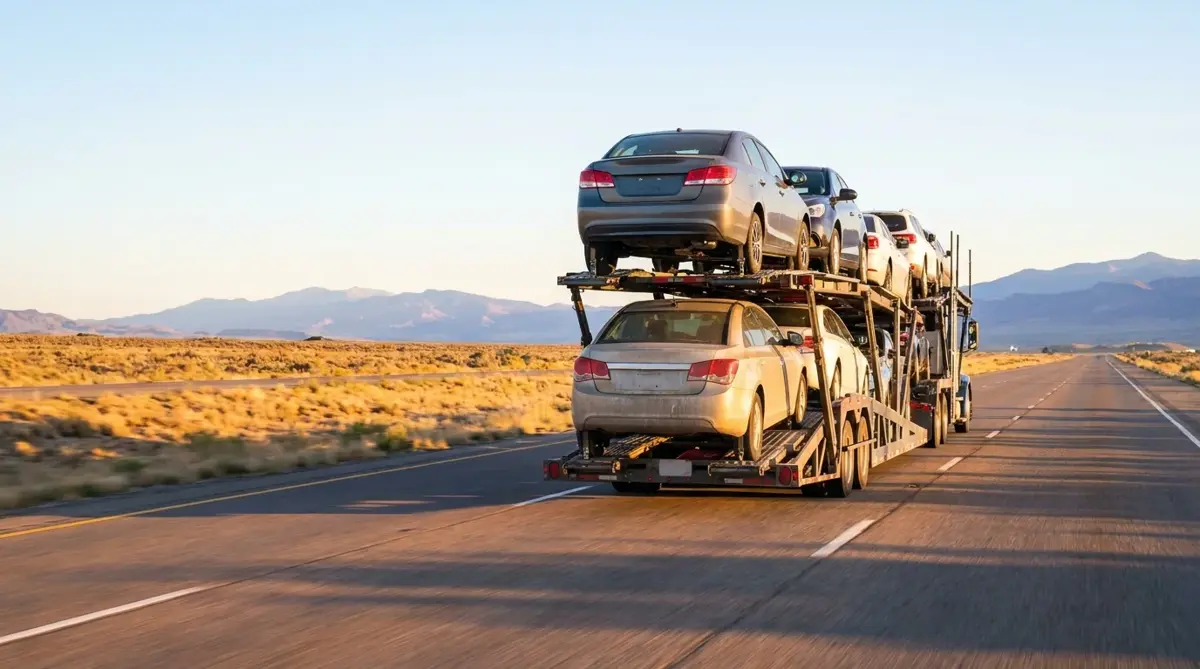
Here's a number that tells you something real about where the country is headed: long-haul auto transport -- shipments running 1,500 miles or more -- is the fastest-growing segment of our industry, tracking roughly 42% ahead of where it was a year ago. We've been doing this since 1999, and we've never seen the cross-country share of the shipments we see grow like it has these past couple of years. Short regional moves still make up plenty of volume, but the growth is in the big ones: California to Texas, the Northeast to Florida, coast to coast in both directions.
What's driving it? Three things, mostly. First, people are still relocating in big numbers -- toward the Sun Belt, toward lower cost of living, toward wherever the job or the family is. Second, remote and hybrid work keep making those moves possible; when the office is a laptop, a 2,000-mile move is a housing decision, not a career one. And third -- this one's newer -- Americans are increasingly buying vehicles out of state. Between auction inventory, tariff-squeezed new-car prices, and the fact that the exact used car you want is rarely parked in your own zip code, more and more purchases end with the same question: how do I get it home?
| Route length | Typical total | Per mile | Typical transit |
|---|---|---|---|
| Under 500 miles | $400 - $700 | $1.00 - $1.40 | 1 - 3 days |
| 500 - 1,000 miles | $600 - $900 | $0.70 - $1.00 | 2 - 4 days |
| 1,000 - 1,500 miles | $800 - $1,100 | $0.60 - $0.80 | 3 - 6 days |
| 1,500 - 2,000 miles | $900 - $1,250 | $0.50 - $0.65 | 4 - 8 days |
| 2,000 - 2,800 miles (coast to coast) | $1,000 - $1,400 | $0.40 - $0.55 | 5 - 10 days |
Now, here's the counterintuitive part that works in your favor: long-haul is where auto transport pricing is at its most efficient. The economics are simple once you see them. A carrier's expensive miles are the first and last ones -- the city driving, the loading, the coordination of eight or nine pickups and deliveries. The middle 1,800 miles of interstate are the cheap part. That's why a 500-mile shipment might cost you $1.20 a mile while a 2,500-mile shipment runs closer to fifty cents. The total is bigger, but the per-mile rate on a coast-to-coast move is often the best deal in the industry.
“The 2,500-mile shipment is often the best per-mile deal in the industry -- the miles are cheap; it's the pickup and delivery that cost money.”
Put real numbers on it: a running sedan on an open carrier from Los Angeles to New York typically lands between $1,000 and $1,400 and takes five to ten days door to door. The same car moving 400 miles up the coast might be $500 -- a fraction of the price, but at more than double the per-mile rate. This is also why the ship-or-drive math tips harder toward shipping as the distance grows. A cross-country drive means three or four days of your time, $300 or more in fuel, a couple hundred in hotels and meals, and 2,800 miles of wear and depreciation on the car. Add it honestly and the transport quote usually wins before you even price your vacation days.
Ready to ship? Get a real price in 60 seconds.
We put your shipment in front of licensed auto transport companies running your route this week, and they send you their best offers — no obligation, no spam.
Get My Free Quote →The surge does change how you should book, though. On the high-volume corridors -- California-Texas, California-Northeast, Florida up and down the East Coast -- all that new demand has been met by carriers concentrating equipment on those lanes, so competition stays healthy and pricing stays sharp. Where you feel the growth is off the main corridors: the move from a small town in Montana to rural North Carolina touches lanes with fewer trucks on them, and those need lead time. Our standing advice in this market: book two to four weeks ahead for anything long-haul, and keep your pickup window flexible by a few days. Flexibility is worth real money -- a carrier who can slot your car into an existing route bids lower than one who has to detour for a rigid date.
Seasonality still matters on top of all this. Summer is peak relocation season, and January brings the snowbird rush south-to-north in reverse. If your cross-country move can float a few weeks in either direction, shipping in the shoulder weeks -- late September, early November, February -- consistently prices better than the peaks. If it can't, book earlier and let licensed partners compete for the date you need.
That competition part is exactly why we built American Auto Shipping the way we did. Vetted, licensed auto transport companies compete for your shipment. On the big corridors, that means several carriers who already run your lane pricing your car against each other, which is how you get a real market rate on a 2,500-mile move instead of a padded one. Tell us the route, compare the offers, pick your carrier -- or call us at (800) 930-7417 and we'll walk you through it. The country's moving. Your car can get there too.
About the Author
American Auto Shipping
Dave Armstrong is one of American Auto Shipping's longest-tenured team members. As content manager and strategist, most of what you read on this website came from him. He has extensive knowledge of the auto transport industry, having spent time in every role the business has to offer.
Learn More About Auto Shipping
Shipping To or From These Areas?
Popular routes
Auto transport by city