




Auto transporters are back in the spotlight, and this time, it’s not about fuel prices or weather delays — it’s about language. In April 2025, President Trump signed an executive order requiring all commercial drivers in the United States to speak and read English proficiently. If you’re outside the trucking industry, you might be wondering why this is even a story. But I’ve been in auto transport since 1999, and I can tell you — this is one of the most significant operational changes to hit our industry in years, and it’s long overdue.
Let me set the stage. The Federal Motor Carrier Safety Administration has technically had an English proficiency requirement on the books for decades. Section 391.11(b)(2) of the FMCSRs says a driver must be able to read and speak English sufficiently to understand highway signs, respond to officials, and make entries on reports. But enforcement has been, to put it diplomatically, inconsistent. The new executive order puts real teeth behind the requirement — stricter enforcement protocols, penalties for carriers who employ non-compliant drivers, and a clear directive to FMCSA to make this a priority during roadside inspections and compliance audits.
Here’s why this matters for auto transport specifically. When a car hauler shows up at your house to pick up your vehicle, there’s a critical conversation that needs to happen. The driver needs to verify the vehicle details, walk you through the Bill of Lading, document any existing damage with you, explain the loading process, and confirm the delivery address and contact information. If the driver can’t communicate clearly in English, things get missed. I’ve seen it happen — damage that wasn’t noted at pickup because the customer couldn’t communicate with the driver, wrong delivery addresses because of a misunderstanding, vehicles loaded incorrectly because the driver couldn’t read the dispatch notes. These aren’t hypotheticals. These are real problems we’ve dealt with.
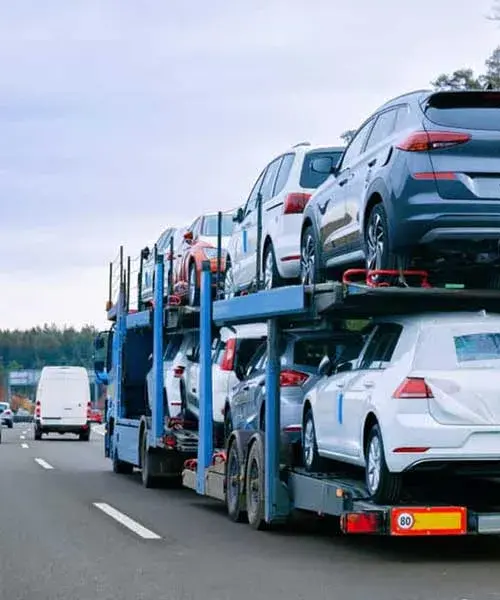
The safety angle is even more important. Car haulers are among the heaviest vehicles on the road. A fully loaded nine-car carrier weighs 80,000 pounds or more. The driver needs to read road signs, understand detour instructions, communicate with weigh station officers, respond to emergency dispatchers, and coordinate with other drivers at loading facilities. A language barrier in any of those situations isn’t just inconvenient — it’s dangerous. DOT inspection officers have reported cases where drivers couldn’t read their own logbooks or understand questions about their hours of service. That puts everyone on the road at risk.
Now, I want to be careful here because I know this topic can get politically charged. This isn’t about where someone is from. The auto transport industry — and trucking in general — relies heavily on immigrant drivers, and many of them are outstanding professionals who speak English fluently. This rule isn’t targeting any group of people. It’s targeting a safety and communication gap that exists when any driver, regardless of background, can’t effectively communicate in the language used on American roads, signs, shipping documents, and inspection forms.
From a practical standpoint, the industry is going to feel this in two ways. First, there will be a short-term tightening of the driver pool. Some carriers — particularly smaller outfits — have been operating with drivers who would not pass a strict English proficiency evaluation. As enforcement ramps up, those drivers will either need to demonstrate proficiency or step away from commercial driving until they can. That reduces the number of available drivers at a time when capacity is already tight.
Second, and this is the upside, the quality of service should improve industry-wide. When every driver picking up and delivering vehicles can clearly communicate with customers, damage claims go down, delivery accuracy goes up, and the overall customer experience gets better. I’ve always believed that the driver interaction is the most important moment in the entire auto transport process. It’s the one time the customer meets a real person face to face. If that interaction goes well, everything else fades into the background. If it goes poorly, nothing else matters.
For carriers and brokers, the compliance side is straightforward but serious. Carriers need to document that their drivers meet the English proficiency requirement. That means either a standardized test, a documented assessment during hiring, or some form of certification. Carriers who don’t comply face penalties ranging from fines to out-of-service orders. Brokers — including us — have a responsibility to work with carriers who are in compliance. At American Auto Shipping, we vet our carrier network rigorously, and this is now another box that has to be checked.
If you’re a customer shipping a vehicle, here’s what you should know. You have every right to expect clear communication from the driver who picks up and delivers your car. If you can’t understand the driver or the driver can’t understand you during the inspection process, that’s a problem — and it’s a problem you should report to the transport company immediately. The Bill of Lading is a legal document. If you’re signing something and you can’t confirm the driver understands the condition notes, you’re taking on risk you shouldn’t have to.
The timeline for full enforcement is still being worked out, but FMCSA has signaled that roadside inspection officers are already being trained to evaluate English proficiency more rigorously. Compliance reviews of carrier operations will include language proficiency checks. The industry has been given notice, and the smart operators are getting ahead of it.
At American Auto Shipping, we’ve always prioritized working with professional, communicative drivers. It’s one of the reasons we maintain the service quality we do. This new rule aligns with how we’ve operated for over 25 years — we want every pickup and delivery to go smoothly, and clear communication between the driver and the customer is the foundation of that. If you’re shipping a vehicle and you want the peace of mind that comes from working with a company that takes driver quality seriously, give us a call. We’ve been doing this the right way since day one.