




Classic & Collector Car Shipping
Compare offers from licensed enclosed auto transport companies and choose the one you trust with the trip.
Shipping a Car That Cannot Be Replaced
Most classic and collector cars ship enclosed, with the paperwork and photos done before pickup and the insurance questions asked before you book. This guide covers each step, plus auction pickups, cars that do not run, and very low cars, with a current enclosed estimate table.
Original paint, matching numbers and period-correct trim cannot be ordered from a parts counter. We have helped people ship vehicles since 1999 (over 27 years), and the choices below are the ones owners ask about most. We put your shipment in front of vetted, licensed auto transport companies, they compete with their best offers, and you choose and book with the company you trust.
Why Most Collectors Choose Enclosed
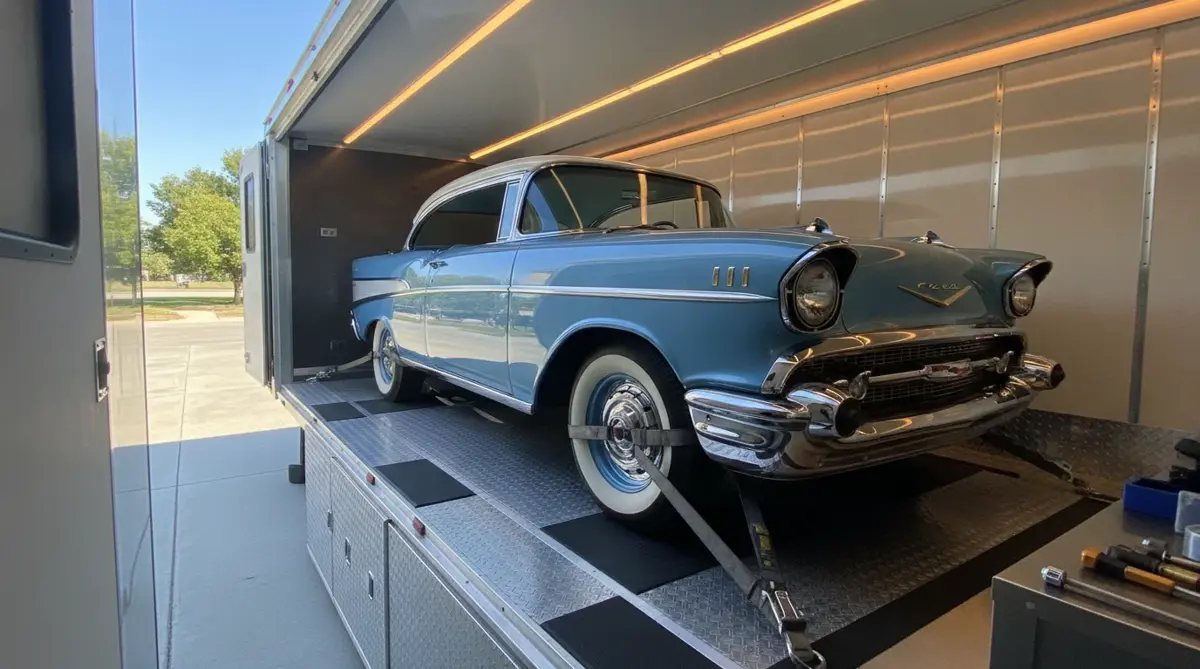
An open carrier is the standard for everyday cars. For a restored or high-value car, the guidance Hagerty publishes for collectors is blunt: enclosed transport “should be the only choice for a restored or high-value vehicle,” because open carriers leave the car exposed to road hazards.
- Road debris: a rock chip on original lacquer is not a ten-minute fix.
- Weather and sun: rain, road salt spray and UV over several days are hard on untreated chrome, old seals and fragile finishes.
- Irreplaceability: modern paint can be matched; a numbers-matching original cannot be undone once it is changed.
A driven classic you enjoy and do not mind exposing to the road can still ship open at a lower price. The decision is about the car, not a rule. For the full comparison, read open vs. enclosed transport or the enclosed auto transport page.
Enclosed Estimates on Common Routes
These are current enclosed estimate ranges for a standard sedan from our published formula. Heavier cars, very long or low cars, and cars that do not run cost more, and the company you book with sets the final price.
| Route | Distance | Typical transit | Enclosed estimate | Open, for comparison |
|---|---|---|---|---|
| Los Angeles, CA to Miami, FL | 2,737 mi | 7–10 days | $2,270 – $3,550 | $1,510 – $2,370 |
| New York, NY to Los Angeles, CA | 2,801 mi | 7–11 days | $2,300 – $3,590 | $1,530 – $2,400 |
| Chicago, IL to Los Angeles, CA | 2,022 mi | 6–8 days | $1,970 – $3,070 | $1,310 – $2,050 |
| Dallas, TX to Miami, FL | 1,311 mi | 4–6 days | $1,610 – $2,520 | $1,080 – $1,680 |
| Atlanta, GA to New York, NY | 884 mi | 3–5 days | $1,230 – $1,660 | $820 – $1,110 |
| Phoenix, AZ to Los Angeles, CA | 368 mi | 2–4 days | $820 – $1,280 | $550 – $850 |
For your own cities, use the shipping cost estimator.
Formula v2026.09.2 · EIA U.S. diesel $6.29/gal, week of Nov 2, 2026, 52-week average $4.93 · November pricing · road miles from OpenStreetMap routing where cached, otherwise straight-line distance ×1.2.
Estimate, not a quote. Produced automatically by our published formula from public data; your price comes from the licensed auto transport partner you choose. How we estimate · Get your free estimate
Fuel: U.S. Energy Information Administration. Routing: © OpenStreetMap contributors (OSRM). ZIP locations: U.S. Census Bureau.
Questions about this estimate? Call (800) 930-7417
Before Pickup: Paperwork, Photos and Prep
- Wash the car. Hagerty advises it so the inspection is easier and damage is easier to see.
- Photograph it. Take dated photos of every panel, the roof, the wheels, glass, the interior and the odometer reading, in daylight. Photos are your own record of the car’s condition at pickup.
- Write down how to start it. Hagerty suggests written instructions for starting the car, locating fuel or ignition cut-off switches, and any alarm details.
- Fuel and battery. Keep the tank about a quarter full, make sure the battery is charged, and check antifreeze for the climate at both ends of the trip.
- Gather your documents. Keep a copy of the title or registration, your own insurance card and a written statement of the car’s value. Keep the originals with you, not in the car.
- Note what is not stock. Tell the company about lowered suspension, wide tires, a fiberglass body, missing bumpers or a soft top, so loading is planned for them.
- Read the Bill of Lading. Note the pre-existing condition on it at pickup. At delivery, inspect the car in good light before you sign, and note any new scratch on the Bill of Lading, then sign.
Insurance: What to Ask the Company You Book With
The transport agreement, and the cargo coverage that goes with it, is between you and the company you book with, so ask before you choose:
- Can I see your certificate of insurance, and is the cargo limit per vehicle enough for my car’s value? Hagerty suggests a limit of at least $100,000 per vehicle for enclosed transport.
- Is there a deductible, and what does the policy exclude?
- Does the limit apply to the enclosed trailer I am being offered?
- Will I be asked to sign a damage waiver? Hagerty warns against it, because it may prejudice your own insurer’s rights.
- Is my car loaded alone or with other cars, and what happens to the schedule if it is a multi-car load?
Also call your collector insurance provider before shipping. Hagerty’s advice is to hold agreed value coverage from a collector-car specialist; ask whether it follows the car in transit. You can look up any company’s operating authority and insurance on file in FMCSA’s Licensing and Insurance system, or by calling FMCSA at 1-800-832-5660.
Auction Pickups, Non-Running Cars and Low Clearance
Collector car auctions
Whether you bought at a live collector car auction or an online sale, ask the auction two things before the sale: how long you have to collect the car, and what the gate needs to release it (usually the buyer’s paperwork and a named pickup person). Get your free estimate before bidding so shipping is part of your total, and book once you have won. See auction auto transport for more.
Cars that do not run
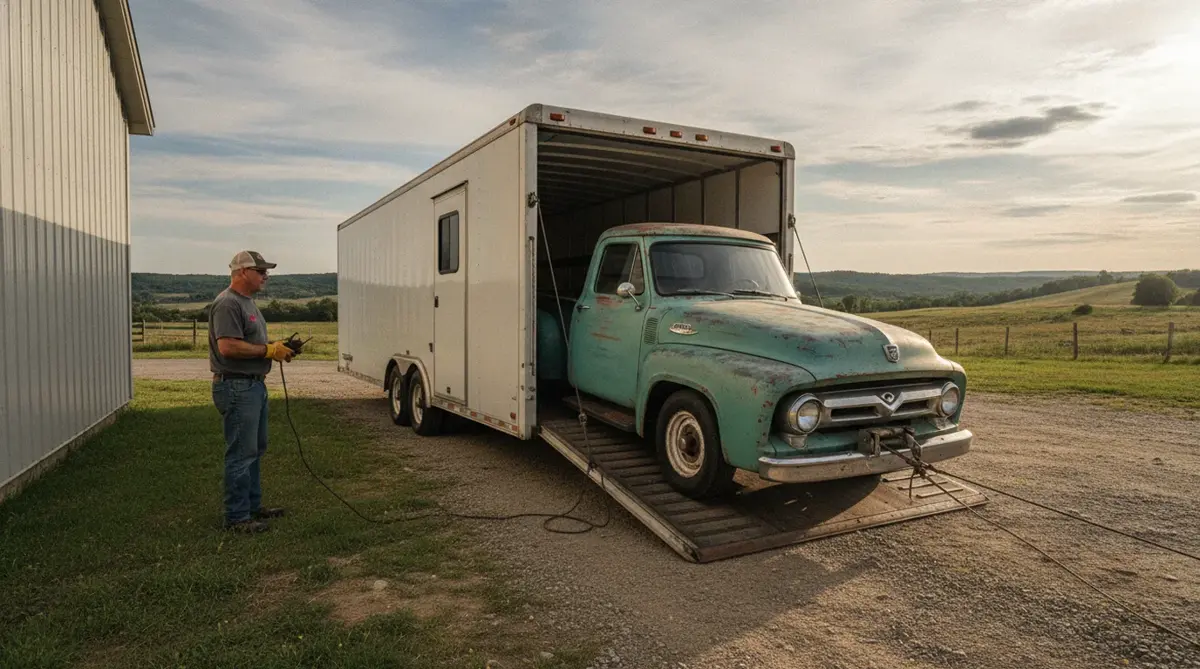
Say so when you request your estimate. A car that rolls, steers and brakes can usually be winched on; one that cannot roll may need a forklift or lift. Offers from companies without the equipment are not the offers you want.
Low-clearance cars
Give the ground clearance, the front overhang and any splitter or skirts. Hagerty notes ramp-loaded enclosed trailers can be risky, especially when wet or for low cars, and recommends lift-gate loading and asking about the equipment before you book. Ask the company which it uses.
Types of Antique and Classic Cars Shipped
The companies we work with ship the full spectrum of antique and classic vehicles:
- Pre-war classics — Model T Fords, Duesenbergs, Packards, and other brass-era and classic-era vehicles
- 1950s and 1960s American classics — Tri-five Chevys, early Corvettes, Thunderbirds, Cadillacs
- Muscle cars — Camaros, Mustangs, Challengers, GTOs, Chevelles, and the rest of the golden era
- European classics — Vintage Mercedes, Jaguars, Alfa Romeos, and early Porsches
- Barn finds and project cars — Non-running, partially disassembled, or rough-condition vehicles
- Concours-quality restorations — Frame-off restorations that need to arrive in showroom condition
- Hot rods and customs — Modified classics that need careful handling due to non-standard dimensions
Whether your car is a concours-winning restoration or a barn find that has not moved in 30 years, we put it in front of licensed companies with the experience to move it safely. For exotic and luxury vehicles, the same enclosed options apply.
Classic Car Shipping FAQ
For a restored, original-paint or high-value car, enclosed is the usual choice: Hagerty's shipping guidance says enclosed transport "should be the only choice for a restored or high-value vehicle." A driver-restored classic you do not mind exposing to the road can go open and costs less. Either way, ask the company you book with how its trailer loads a low or long car. See enclosed auto transport and the open vs. enclosed guide.
Our published formula prices enclosed transport at 50% above open on the same route, and the table on this page shows current enclosed estimate ranges for a standard sedan on six common routes. It is an estimate, not a quote: the licensed auto transport company you choose sets the price, and a non-running car, an oversize car or a rural address changes it. Get your free estimate for your car.
Yes, if you say so up front. A car that can roll, steer and brake can usually be winched onto a trailer; one that cannot roll may need extra equipment. Tell us about it when you request your estimate so the offers come from companies that have winches or a lift gate and can price the extra handling.
Ask the company you book with for its certificate of insurance and the cargo limit per vehicle, what the deductible is, whether the limit applies to an enclosed load, and what is excluded. Hagerty suggests checking the bill of lading for a realistic liability limit, and not signing a damage waiver, because it may prejudice your own insurer's rights. Call your own collector policy provider too: ask whether it covers the car in transit. You can look a company up in FMCSA's Licensing and Insurance system.
Yes. Auction pickups, in person or online, are common. Tell us it is an auction pickup, the sale date and the pickup window the sale allows; many sales set a short window to collect the car, and the company you book with will need the release paperwork, gate pass or buyer ID the auction requires. See auction auto transport.
Give the exact ground clearance and any splitter, skirts or long overhangs when you request your estimate. Hagerty notes that ramp loading can be risky for low-clearance cars and recommends lift-gate loading and asking about equipment before booking. Ask the company you book with how it will load the car and whether it uses ramp extensions or a lift gate.
Ask the company you book with before pickup. Many companies limit or exclude loose items and may not insure them. Keep the car itself free of valuables, and ship spare parts separately when the company says to.
Sources
- Hagerty: Domestic shipping tips for collector cars (PDF) — Enclosed transport for restored or high-value cars, lift-gate loading, agreed value coverage, checking the bill of lading limit, inspecting in good light before signing.
- FMCSA: Where to look up a carrier, broker or freight forwarder (operating authority and insurance) — Look a company up in the Licensing and Insurance system; FMCSA phone line 1-800-832-5660.
- FMCSA: What forms are required for insurance, and where can I find them — Insurance filings are made by the insurer, not by the carrier or broker.
Ready to Ship Your Classic?
Tell us the car, the route and anything out of the ordinary, and licensed enclosed companies compete with their best offers. You never pay us a cent.
Get your free estimateOr call (800) 930-7417